
Nobody at the return counter is going to tell you the Kitchen in the Box mixer has a motor that gives up partway through a batch of bagel dough. The listing photos show it kneading bread like it's nothing, and for a lot of what I make, it is nothing. But I've had the machine chug and slow and finally stall on stiff dough twice now, and neither time was a fluke. That's the kind of detail that never makes it into a five-star review written the week someone unboxed the thing, and it's exactly the kind of detail this review is for.
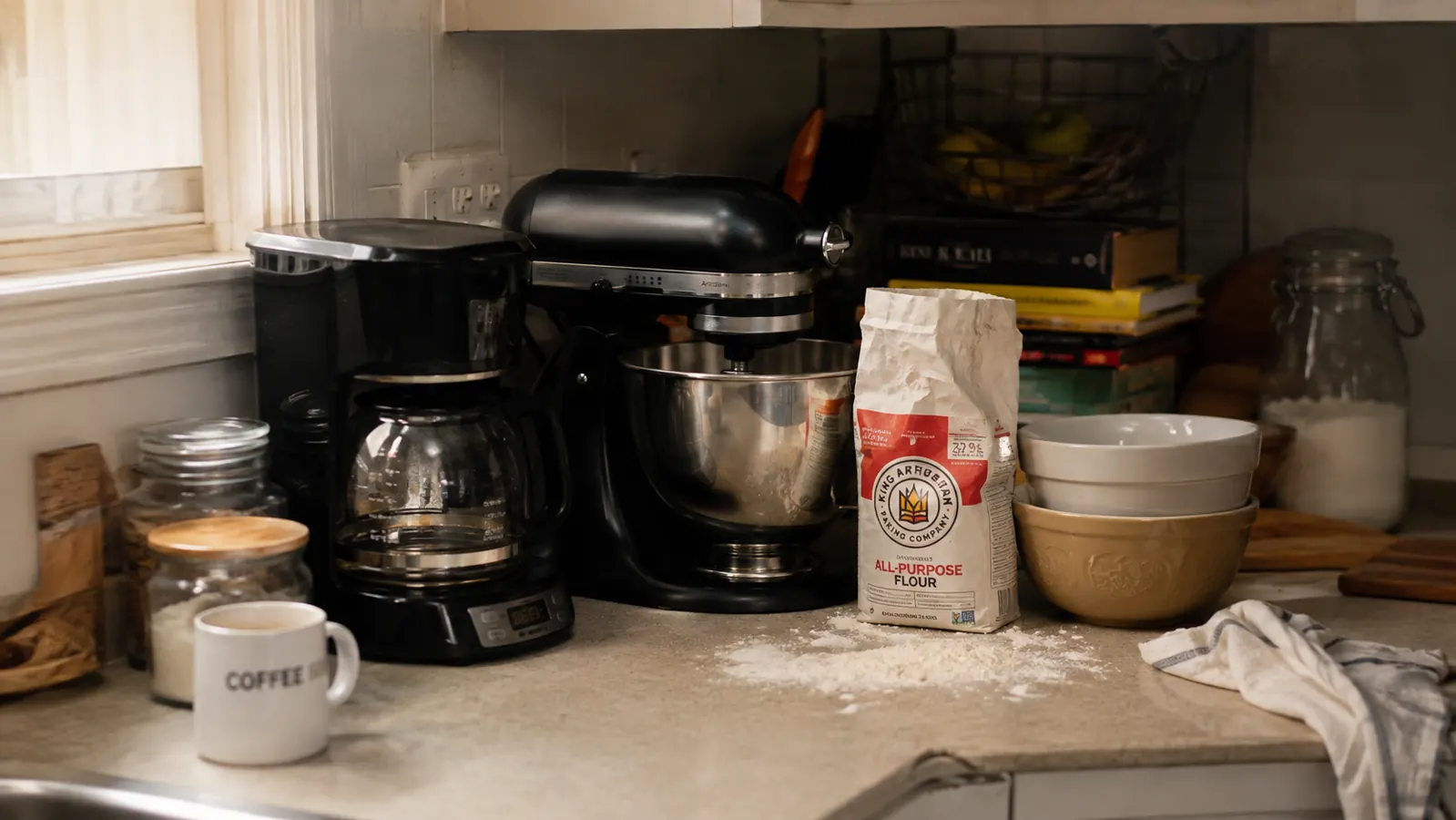
I bought the Kitchen in the Box mixer because my old stand mixer took up a third of my counter and I was sick of moving it to reach the toaster. This one solved that problem completely. But solving the counter problem didn't mean it solved every problem, and I want to walk through the specific things that surprised me, the annoyances that are real but not disqualifying, and a few that might be disqualifying depending on what you actually bake.
The Quick Verdict
The Kitchen in the Box mixer handles cookie dough, cake batter, and whipped cream without complaint, but it has a real ceiling on stiff bread dough, a bowl that's smaller in practice than its 3.2 quart rating suggests, and a splash guard that only half does its job. None of that makes it a bad buy. It makes it a buy you should go into with your eyes open.
Amazon Check Today's Price →Before you assume it handles everything a full-size mixer does, see what it's actually rated for
Check today's price and current availability for the Kitchen in the Box Stand Mixer on Amazon, and read the specs I wish I'd read more closely.
Amazon Check Today's Price on Amazon →How I've Used It
I've had this mixer for a little over four months, and I use it two or three times a week, which for me means cookies most often, a cake every couple of weeks, whipped cream for whatever needs it, and bread dough maybe once a month because bread in a small kitchen is already a project and I don't always have the patience. That last category is where the trouble started, and it's worth saying up front that most people buying a compact mixer are not making sourdough boules three times a week. If you are, keep reading, because this section matters more for you than for most buyers.
This review isn't structured around whether the Kitchen in the Box mixer works, because it does, most of the time, for most tasks. It's structured around the specific spots where it doesn't behave the way the marketing implies, the stuff that only shows up after real use, on a weeknight, with a recipe you didn't plan around the machine's limits.
I also went back and reread my own notes from earlier months of ownership to make sure this piece wasn't just repeating what I'd already said. It isn't. The long-term review of daily use is one story, wear, results, how it held up. This is the list of specific quirks and limits I ran into once I started paying close attention on purpose, which is a different kind of looking.
The Motor Has a Ceiling, and Stiff Dough Finds It
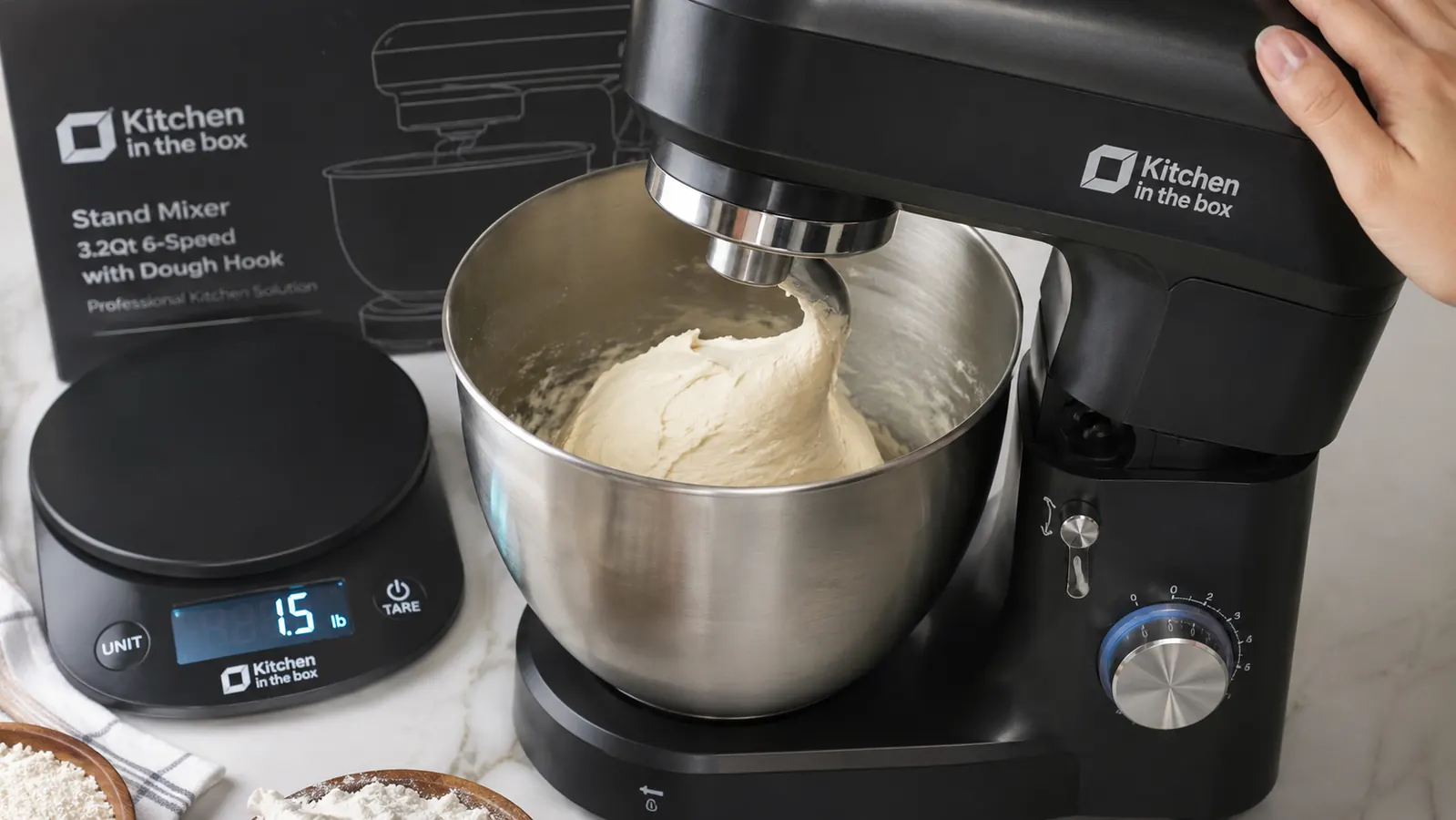
The Kitchen in the Box mixer runs on a small motor, which is the whole point of a compact mixer, less bulk, less weight, easier to lift into a cabinet. But small motor means less torque, and torque is exactly what stiff bread dough demands. I made a basic bagel dough with about 1.5 pounds of flour, which isn't an unusual batch size, and by the second minute of kneading on the dough hook the motor's pitch changed. It got lower, strained, the kind of sound that makes you reach for the power button out of instinct even before you've decided to.
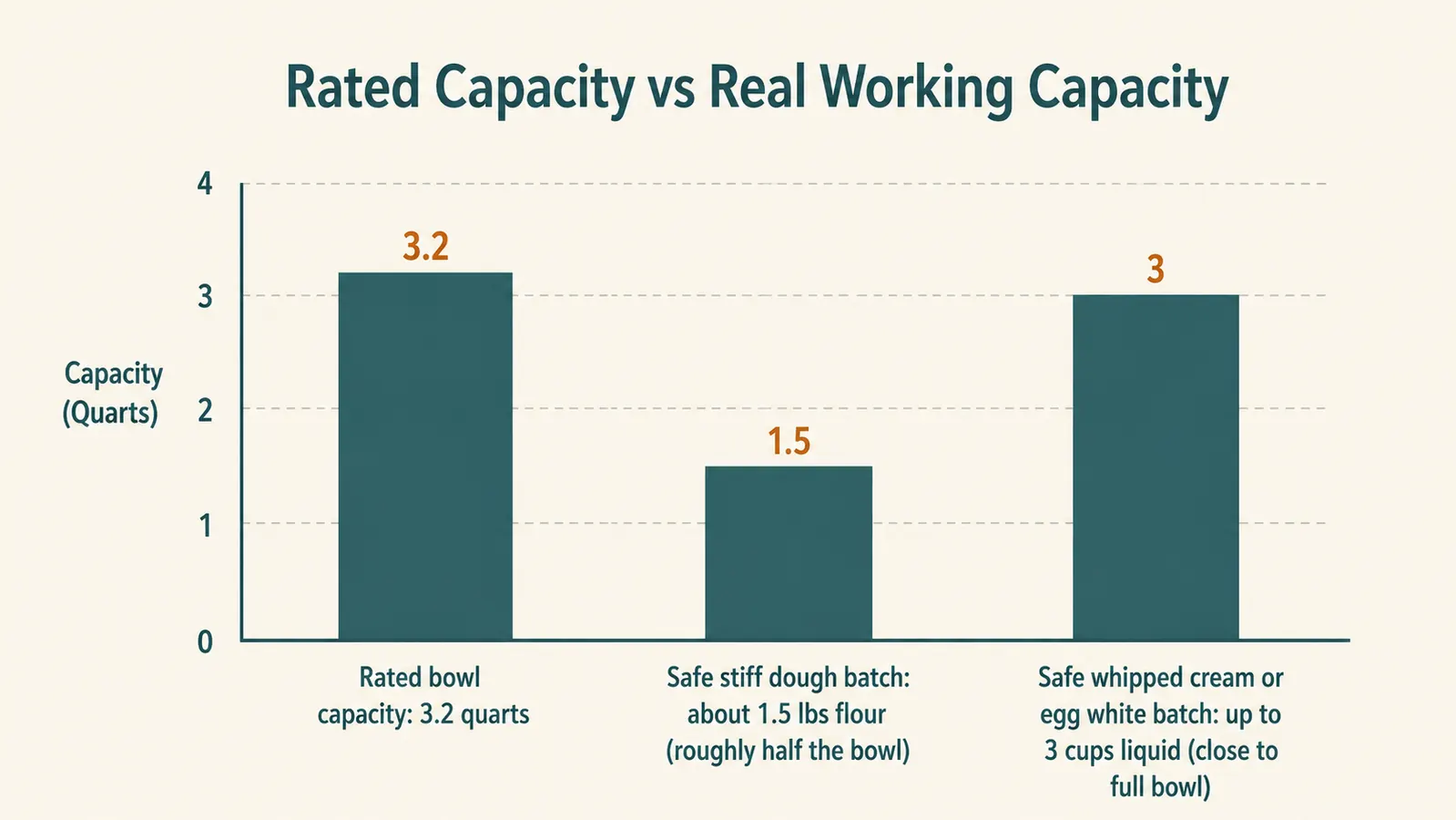
I let it keep going that first time and the motor didn't burn out, but it also didn't finish the job the way a full-size mixer would have. I ended up pulling the dough out and finishing the kneading by hand on the counter, which defeats a fair amount of the reason I bought a mixer in the first place. On a second attempt with a smaller batch, closer to a pound of flour, it managed fine. So the honest number, based on what I've actually run through it, is somewhere around 1.5 pounds of flour as the point where things start to strain, and I'd treat that as a soft ceiling rather than a hard rule.
Cookie dough, which is stiff but not nearly as elastic as bread dough, never gave it trouble. Neither did thick cake batter. This is specifically a bread problem, and specifically a stiff, low-hydration bread problem. If your baking mostly stays away from that category, you may never notice the ceiling exists, and it's worth reading the step-by-step guide to baking with this mixer before your first batch so you know where that line sits ahead of time.
The Bowl Is Smaller Than 3.2 Quarts Feels Like It Should Be
On paper, 3.2 quarts sounds like a reasonable size, close enough to what a lot of full-size mixers offer that you might not think twice about it. In practice, the usable capacity is smaller than the number implies, because you can't fill a mixing bowl to the rim and expect the beater to do its job without flinging batter over the side. The real safe fill line, the point past which whipped cream starts creeping toward the edge or dry ingredients start escaping the bowl on the first pulse, sits closer to two thirds of that rating.
For whipped cream and egg whites, which expand as they whip, that means starting with less liquid than you'd guess. I've had good results topping out around 3 cups of heavy cream before things get precarious near the top edge of the bowl. For stiff mixtures like cookie dough, the ceiling is more about the dough climbing the beater and packing into the corners than about volume itself, but a double batch of a standard chocolate chip recipe is right at the edge of what feels comfortable, and I'd call anything bigger than that risky without stopping to scrape down twice.
None of this showed up anywhere in the product description before I bought it. The listing shows the bowl full of what looks like finished batter, not what it looked like getting there. If you're used to a larger mixer's bowl, budget for smaller batches or plan to run two rounds instead of one.
The Splash Guard Guards About Two Thirds of the Splash
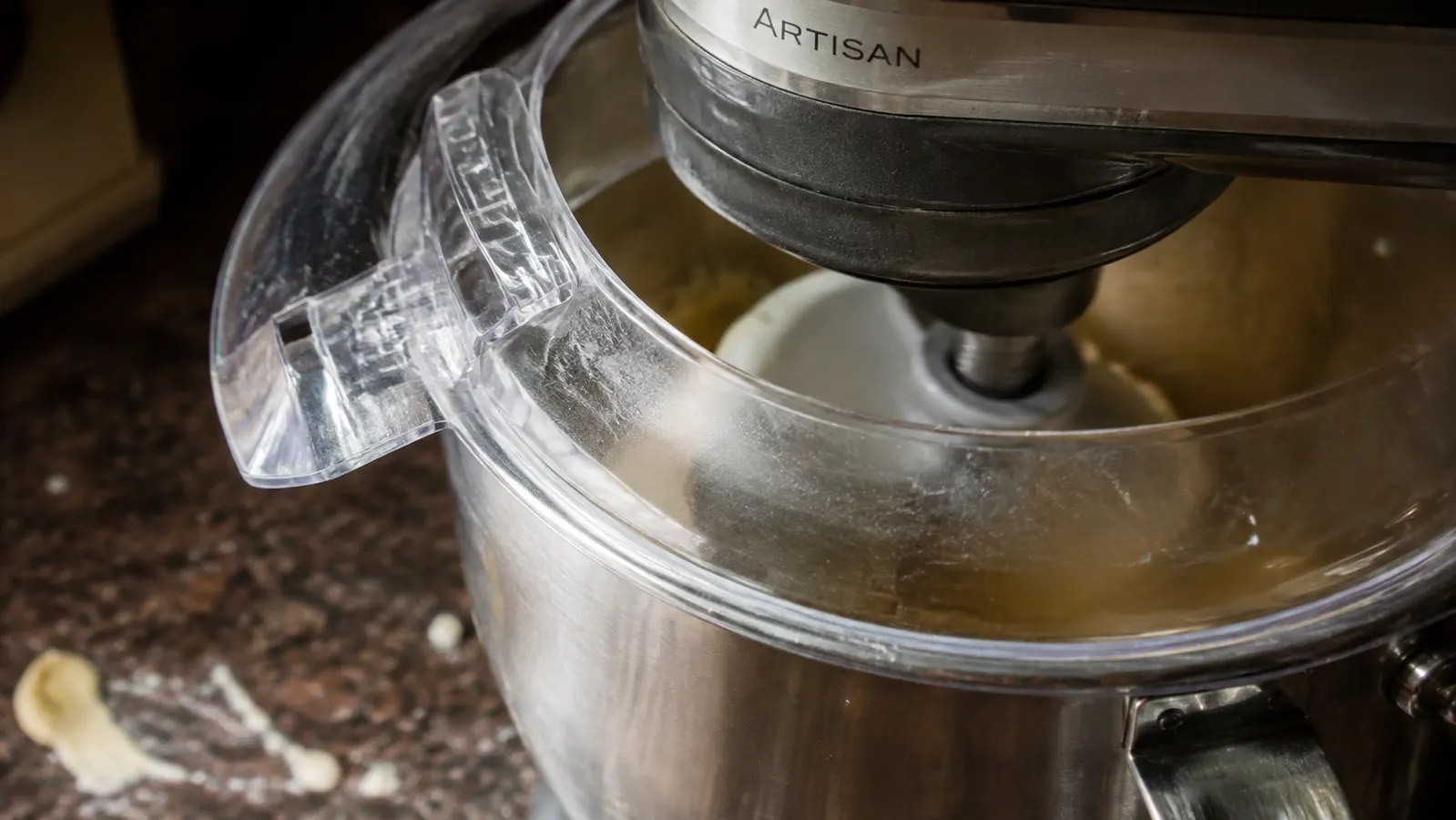
The included splash guard clips onto the bowl and has a small feed chute at the top for adding ingredients without stopping the machine. It works well for that specific purpose. What it doesn't do is fully seal the gap between the guard and the bowl's rim, especially on the side where the beater arm passes through. On anything liquid, thin batters, cream before it's whipped enough to hold shape, a bit of splash gets past that gap and lands on the counter just outside the guard's ring.
It's not a mess on the scale of running the mixer with no guard at all, which I did once by accident and regretted immediately. It's a thin ring of spatter that wipes up in ten seconds. But it's a gap between what a splash guard implies it will do and what this one actually does, and worth knowing about before you start a recipe on speed four assuming full coverage.
I've also noticed the guard doesn't stay perfectly seated if you bump the mixer while it's running, which happens more than I'd like in a kitchen this size where the counter next to it doubles as a cutting board staging area. A light tap can shift it just enough to open a wider gap for a few seconds.
Noise, and What It Sounds Like Under Load
On low and medium speeds, the Kitchen in the Box mixer is about as loud as a coffee grinder, noticeable but not disruptive, the kind of sound you can talk over. Push it to the higher speeds, or ask it to work through stiff dough, and the tone changes, louder and with an edge to it that a full-size mixer with a bigger motor doesn't produce doing the same job. It's not dangerously loud. It's just louder than the product photos, which obviously carry no sound, would ever suggest.
If you bake late, after a kid is asleep or in an apartment with shared walls, this is worth factoring in. I've timed my baking around it more than once, not because the mixer is unreasonably loud in any absolute sense, but because the higher speeds carry through a wall more than I expected the first time I ran it at 9 at night.
Small Parts That Feel Small
The attachments, the whisk, the dough hook, and the flat beater, are lighter than the ones that came with my old full-size mixer, and they attach with a twist-lock mechanism rather than a heavier metal pin. That's not a defect, it's a design choice that comes with going compact, but it does mean the attachments feel less substantial in hand, and I've had the whisk pop loose mid-mix exactly once, early on, before I learned to give it a firmer quarter turn than instinct suggested.
The tilt-head hinge, which lifts up to give you room to scrape the bowl or swap attachments, has a small amount of play in it. It locks down fine and hasn't loosened further over four months, but there's a slight wobble when it's tilted up that a sturdier, heavier mixer wouldn't have. It's cosmetic more than functional. I mention it because it's the kind of thing that would worry me if I didn't already expect it from a machine built to weigh less and cost less than a full-size option.
What I Liked
- Handles cookie dough, cake batter, and whipped cream without any of the issues above
- Genuinely light and easy to lift in and out of a cabinet, which was the whole reason I bought a compact model
- Six speeds give enough range for most everyday recipes
- Splash guard's feed chute is genuinely useful for adding flour mid-mix
- Quiet enough on low and medium speeds for normal daytime baking
Where It Falls Short
- Motor strains and can stall on stiff bread dough over roughly 1.5 pounds of flour
- Real usable bowl capacity is closer to two thirds of the 3.2 quart rating
- Splash guard leaves a gap near the beater arm that lets thin batter spatter past it
- Higher speeds are noticeably louder than a full-size mixer doing the same job
- Attachments and tilt-head hinge feel lighter and less rigid than a full-size machine's
The Kitchen in the Box mixer isn't hiding anything on purpose. It's just built for a specific job, small batches of soft and medium-stiff mixtures, and the trouble starts wherever a buyer expects it to quietly do a full-size mixer's job in a smaller shell.
Who This Is For
This mixer makes the most sense for someone baking small batches of cookies, cakes, and quick breads, occasional whipped cream or meringue, and the kind of everyday baking that doesn't push toward dense, low-hydration dough. If your kitchen is small enough that a full-size mixer feels like a permanent tenant on the counter, and your baking rarely calls for kneading serious bread dough, the tradeoffs here are easy to live with. I've gotten more baking done since switching to it than I did in the year before, mostly because it's actually easy to pull out and put away rather than something I had to plan a whole counter reshuffle around, a point covered in more depth in 10 reasons a compact stand mixer fits small kitchens.
It also suits someone who's never owned a stand mixer before and isn't ready to commit counter space or budget to a full-size one. For that person, the Kitchen in the Box mixer is a real upgrade over a hand mixer without the space and weight commitment of a bigger machine, and it's worth reading the direct comparison against a hand mixer before deciding which category actually fits your baking habits.
Who Should Skip It
If you bake bread regularly, especially anything past a light enriched dough, the motor ceiling I hit at around 1.5 pounds of flour is going to be a recurring frustration, not a rare one. You'll either be finishing dough by hand more often than you'd like or looking at a full-size mixer with a stronger motor built specifically for kneading. Anyone who bakes in genuinely large batches, for a big family or for gifting during the holidays, is also going to run up against the real bowl capacity faster than the spec sheet suggests, doubling recipes more often than the 3.2 quart number implies you'd need to. If either of those describes your kitchen, this isn't the wrong mixer because it's poorly made. It's the wrong mixer because it was never built for that job, and the honest version of this review has to say so plainly.
If your baking stays in its lane, the Kitchen in the Box mixer earns its spot
Check today's price and current availability for the Kitchen in the Box Stand Mixer on Amazon before you decide.
Amazon Check Today's Price on Amazon →