
The rice on my stove used to boil over about once a week, usually right when I stepped out of the kitchen for ninety seconds to grab something from another room. I'd come back to a ring of starchy water baked onto the burner and rice that had gone from fine to gummy in the time it took me to walk down the hall and back. I bought the Dash Mini Rice Cooker in February mostly out of frustration with that burner, not because I believed a small countertop gadget was going to change how I cook. Six months later it's still plugged in, and the stovetop pot I used to fight with is back in the cabinet where it belongs.
I live alone and cook for one most nights, on a schedule that moves around more than I'd like. Some evenings dinner happens at six. Other nights it's closer to nine, and I want something that doesn't need me standing over it the whole time. That's the specific problem I was solving for, and it's the lens this whole review runs through. I'm not testing this as a hobbyist with a shelf of appliances. I'm testing it as someone with about two feet of open counter and very little patience left by the time rice actually needs to happen.
The Quick Verdict
A genuinely useful single-serving rice cooker that handles white rice, oatmeal, and quinoa without drama, with a ceramic pot that's easy to clean and a keep-warm function that's more forgiving than I expected, though the 2-cup capacity is a real ceiling if you're cooking for more than yourself.
Amazon Check Today's Price →Still babysitting a pot that boils over the second you turn your back?
See today's price and current availability for the Dash Mini Rice Cooker on Amazon before you decide.
Amazon Check Today's Price on Amazon →How I've Used It
I didn't run a lab test on this thing. I ran it through six months of an actual, unglamorous routine: white rice on weeknights, oatmeal some mornings before I want to think about anything, and quinoa on the weekends when I'm trying to eat something that isn't just carbs and hope. The Dash sits on the same eighteen inches of counter every single day, next to a coffee grinder that also refuses to be put away, and it's been on that spot long enough that I'd notice immediately if it stopped earning it.
The routine that stuck was simple. Rinse the rice in the removable pot itself, add water to whatever line made sense for the amount, drop the pot back into the base, and press the one button it has. There's no dial to fuss with and no screen to squint at in a dim kitchen at ten at night. That single-button setup sounds almost too basic to mention, but on a night when I've had a long day and just want food, not having to think is most of the appeal.
What surprised me is how often I reached for it outside of dinner. I started using it for steel-cut oats on slow mornings, and it does a passable job with quinoa too, though quinoa runs a little wetter than I like unless I pull back the water slightly from what the included instructions suggest. None of that is dealbreaker territory, but it took me two or three tries with each grain to land on ratios that worked for how I actually like things to come out, which is a detail a lot of reviews skip past.
What the 2-Cup Pot Actually Holds
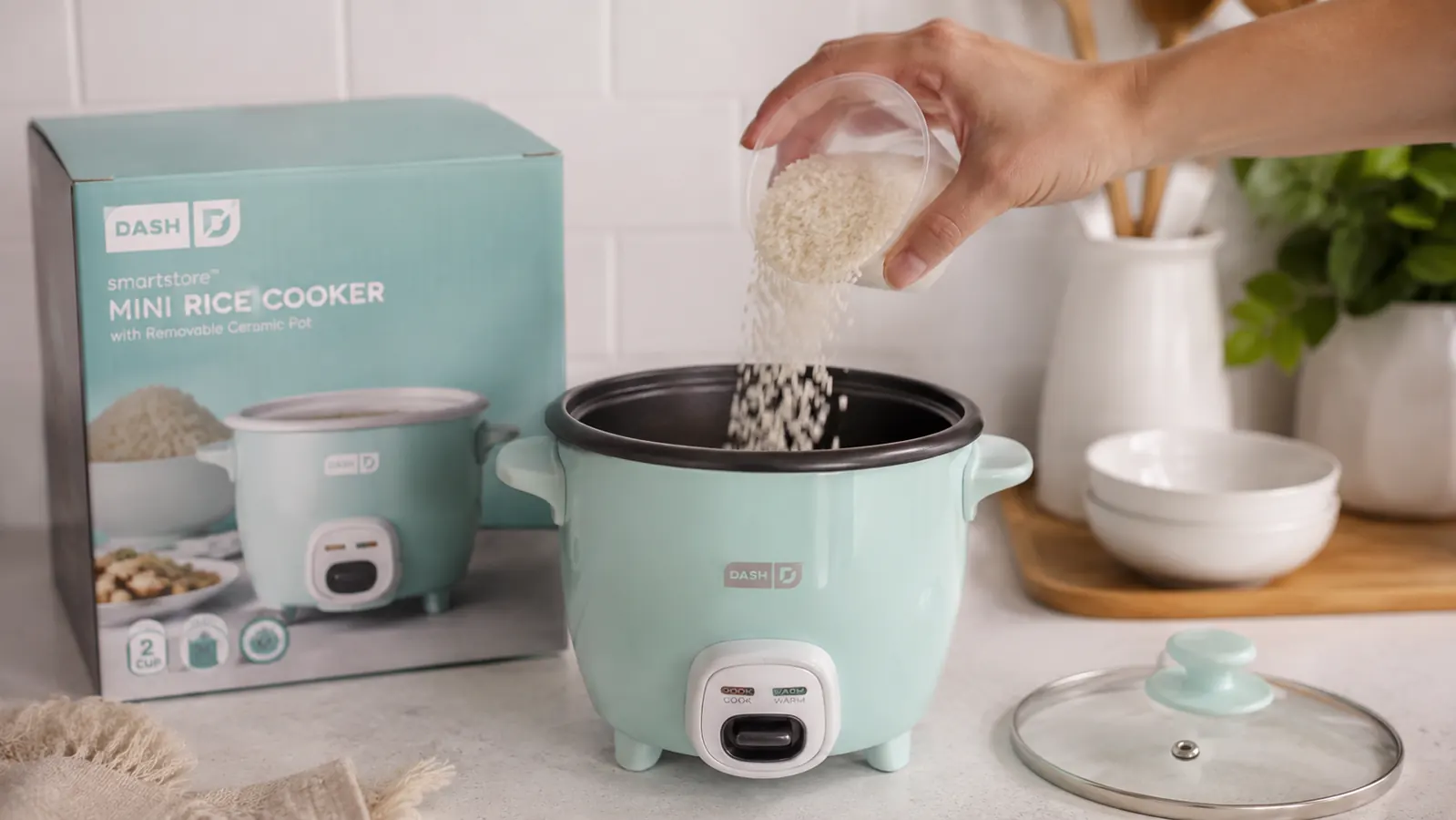
The number that matters most on this product isn't the price, it's the 2-cup capacity, and I want to be specific about what that means in practice because the marketing photos don't make it obvious. Two cups is the uncooked measurement. Once rice cooks up, that turns into roughly four cups of finished rice, which for me, cooking for one, is two full dinners with leftovers to spare, or one big dinner if I'm genuinely hungry. If you're feeding two adults regularly, you'll be closer to the edge of what this pot can do in a single run, and if you're feeding a family, it isn't the right tool at all.
The removable ceramic pot is the detail I didn't expect to care about as much as I do. My old stovetop pot had a metal interior that scorched if I got distracted for even a minute, leaving a stubborn brown ring I'd have to scrub. The Dash's ceramic nonstick surface hasn't done that once in six months, even on the nights I've walked away and come back later than I meant to. Rice that sits past the cook cycle gets a little firmer at the bottom, but it hasn't burned or stuck in a way that required real effort to clean.
There's a learning curve with water ratios, and I'll be honest that I got it wrong more than once early on. Too little water and the rice comes out with a slightly dry top layer even though the bottom is perfect. Too much and you end up with something closer to porridge than rice. Once I found my ratio, which for me lands at just under the fill line printed inside the pot, the results have been consistent enough that I don't measure carefully anymore. I wrote up the exact steps I landed on in a separate guide to cooking rice for one if you want the specifics instead of my trial and error.
Six Months of Late Dinners and Early Oatmeal
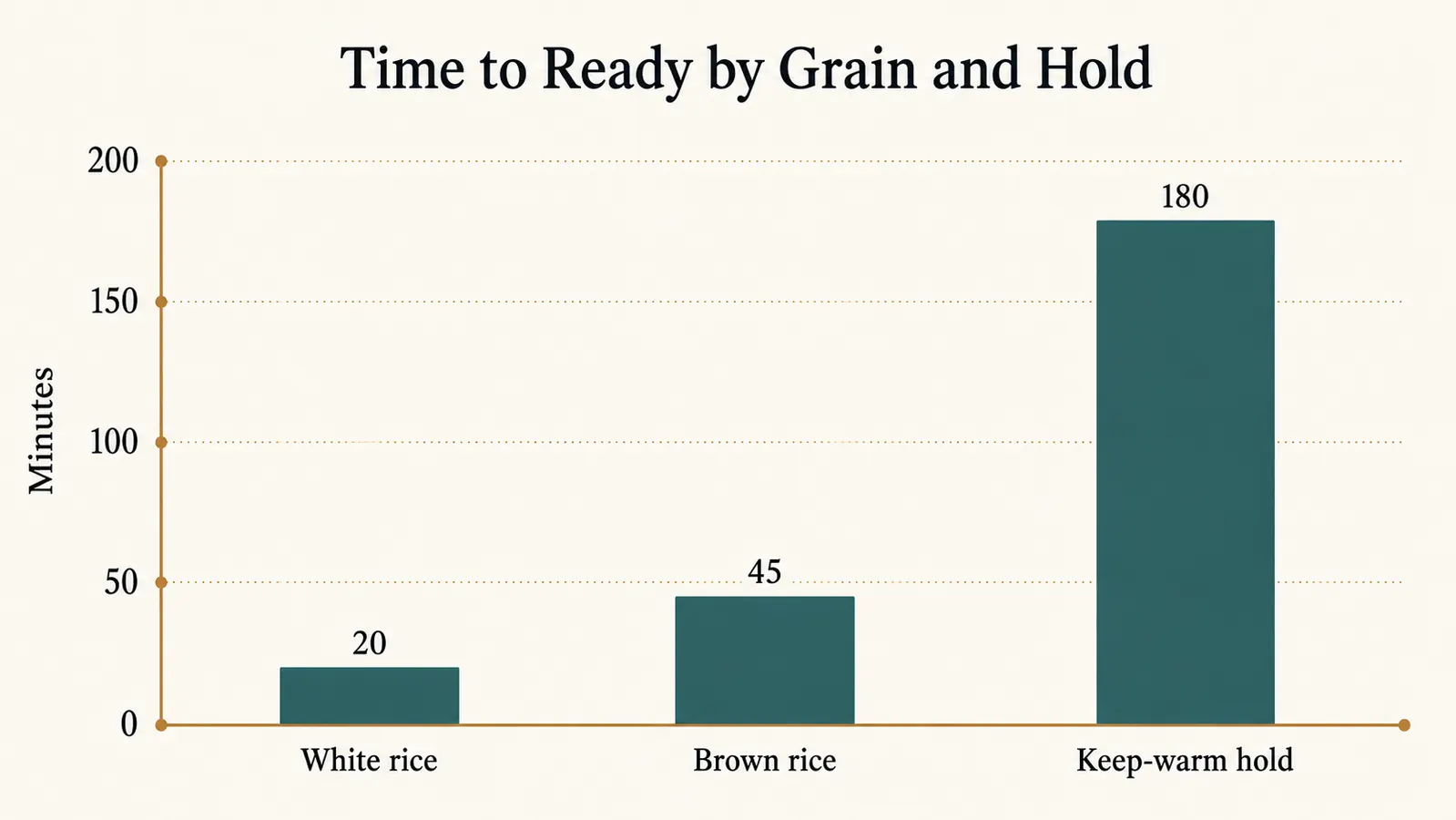
White rice takes about 20 minutes from a cold start to ready, which lines up with what Dash lists for the unit. Brown rice runs closer to 45 minutes, which caught me off guard the first time because I hadn't checked before starting it on a night I was already hungry. Once I knew to plan around that gap, it stopped being an issue, but it's worth knowing going in if brown rice is your default the way it's become mine on weeks I'm trying to eat a little better.
The keep-warm function is the feature that actually changed my evenings, more than the cooking itself did. On nights when dinner slides from six to eight, I can start rice early and it holds at a good texture for close to three hours before things start drying out at the edges. That window has saved more than a few dinners on nights that didn't go the way I planned, and it's the single biggest reason this replaced my stovetop routine instead of just supplementing it.
Morning oatmeal became a habit almost by accident. I started running steel-cut oats overnight on a whim during a stretch when mornings were rushed, and waking up to something already warm and ready has stuck around longer than I expected any kitchen habit to. It's not why I bought the Dash, but six months in, it's become one of the more consistent reasons I use it, and it's part of why the unit earns daily use instead of sitting idle between the occasional rice night.
Cleanup and the Ceramic Coating, Honestly
Cleanup is what decides whether a small appliance stays out or gets shoved into a cabinet, and it's where the Dash has held up the best. The removable ceramic pot comes out of the base in one motion, no latches or awkward angles, and rinses clean under the tap in under a minute most nights. Rice that's gone slightly crusty from a longer keep-warm stretch needs a short soak, maybe five minutes, but I haven't had to scrub in a way that felt like a chore.
The lid is the one part I'll flag. It's not dishwasher safe by the manual's instructions, and the underside collects condensation that drips back down if you set it flat instead of propped at an angle while it dries. I learned that the slow way, with a small puddle on the counter more than once before I adjusted how I set it down. It's a minor habit change, not a design flaw exactly, but nobody mentioned it to me before I bought this and I'm mentioning it to you.
Six months of near-daily use hasn't scratched or dulled the ceramic coating in any way I can see. That matters more to me than it might sound, because the cheap nonstick pans I've owned in the past started shedding their coating within a year of regular use. If that holds for another six months, the Dash will have outlasted more than one pan I've paid similar money for, and that's a real point in its favor for a gadget this size.
What Else I Considered
Before buying, I looked at a couple of other mini rice cookers in the same size and price range. The main alternative I seriously considered was an Aroma model with a similar footprint but a metal, non-removable pot, and I ended up writing a full side-by-side after using both for a stretch, which you can read in my Dash versus Aroma comparison. The short version is that the removable ceramic pot on the Dash won me over for cleanup alone, but the two aren't identical and it's worth reading the specifics if capacity or price is your deciding factor.
I also almost talked myself out of a mini rice cooker entirely and just kept fighting with the stovetop, mostly because I didn't believe a gadget this small could actually replace a habit I'd had for years. I wrote about how that decision actually played out, boil-overs and all, in the story of how this fixed my weeknight dinner problem. If you're on the fence the way I was, that's the more personal version of this same six months.
What I Liked
- Ceramic nonstick pot hasn't scorched or stuck once in six months of near-daily use
- Keep-warm function holds a good texture for close to three hours, which has saved several late dinners
- One-button operation means no dial or screen to deal with at the end of a long day
- Removable pot rinses clean in under a minute most nights
- Handles oatmeal and quinoa well beyond the rice it's marketed for
Where It Falls Short
- 2-cup uncooked capacity is a real ceiling if you're feeding more than one or two people
- Brown rice takes close to 45 minutes, longer than I expected the first time
- Lid isn't dishwasher safe and needs to be propped to dry or it drips
- Water ratios took a few tries per grain type before results were consistent
I didn't buy this expecting it to change a habit I'd had for years. I bought it to stop scrubbing a scorched pot at nine at night, and six months later that's exactly what stopped happening.

Who This Is For
If you're cooking for one or two people on a schedule that doesn't run on a fixed dinner hour, the Dash earns its counter space. It's built for someone who wants to start rice and walk away, not someone who wants to fine-tune every step. If your kitchen has limited counter room and you've been putting off buying a dedicated rice cooker because you weren't sure it was worth the space, I'd point you toward the full list of reasons a mini rice cooker earns its spot before deciding, since it covers the case for this size category better than a single review can.
Who Should Skip It
If you're regularly cooking for a family of four or more, the 2-cup capacity will frustrate you fast, and you'll be running multiple batches often enough that the convenience mostly disappears. If you already own a full-size rice cooker you're happy with and your kitchen has room to store it, there's no real reason to add a smaller second unit on top of it. This is a tool for a specific kitchen and a specific way of eating, not a universal upgrade, and I'd rather say that plainly than oversell it. For the harder edges I didn't cover here, I wrote a more unfiltered breakdown in my honest review after daily use.
If your rice keeps boiling over the second you step away, this is what stopped it
Check today's price on the Dash Mini Rice Cooker and see if it's in stock for your kitchen.
Amazon Check Today's Price on Amazon →