
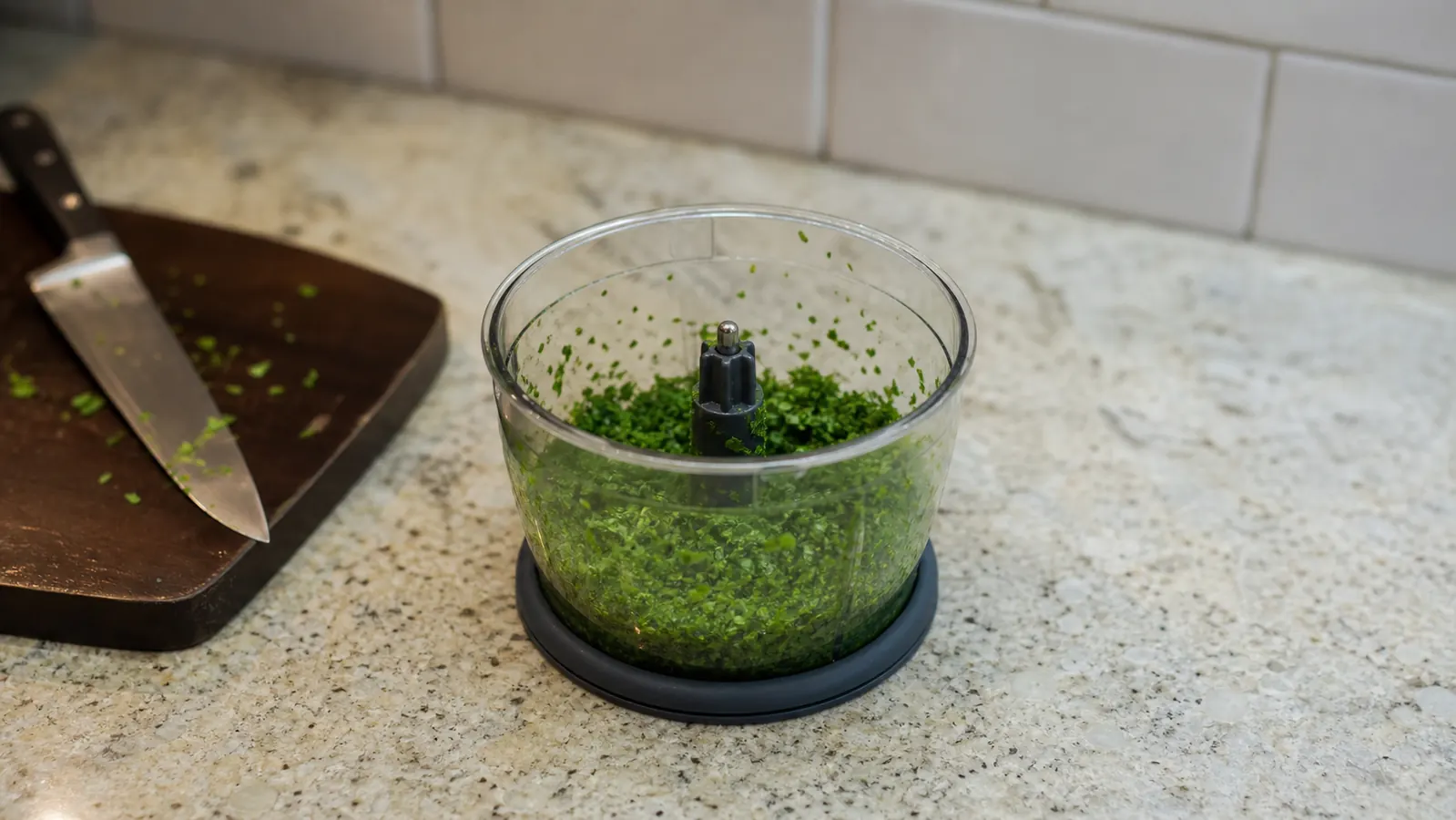
Hand-chopping a bunch of parsley for a recipe that calls for two tablespoons of it is one of those small kitchen tasks that eats more time than it should. You trim the stems, you bunch the leaves, you rock the knife back and forth across the same six inches of cutting board for what feels like five minutes, and half of it ends up stuck to the blade instead of the bowl. Garlic is worse. Mince three cloves by hand on a weeknight and your hands smell like it through the next load of dishes, sometimes into the next morning.
The Cuisinart Mini-Prep Plus is what took that job off my cutting board. It's a small food processor, a 3 cup bowl with one reversible stainless steel blade, and it does one thing well: it turns soft herbs, hard herbs, and garlic into a fine, even chop in under a minute of actual work. What follows is the exact process I use, step by step, along with where people tend to go wrong and turn a chop into a paste. If you want the longer story of how this specific machine earned a spot on my counter after a run of dull hand-me-down blades, I wrote about that in the full review.
Stop scenting your hands with garlic every time you cook
The Cuisinart Mini-Prep Plus turns a bunch of herbs or a few cloves of garlic into a fine, even chop with a handful of pulses, no knife, no cutting board smell that lingers. See today's price on Amazon and check if the 3 cup bowl fits your prep routine.
Amazon Check Today's Price on Amazon →Step 1: Trim and dry the herbs before they go in
Wet herbs are the number one reason a food processor chop comes out clumpy instead of loose and even. If parsley or cilantro is still damp from a rinse, the leaves stick to each other and to the sides of the bowl instead of scattering evenly under the blade, so I wash a bunch as soon as I get it home, spin it dry in a salad spinner, and let it sit out on a towel for a few minutes before it ever goes near the machine. A truly dry bunch of herbs chops into loose, separate pieces. A damp one chops into a wet clump you have to scrape apart with a spoon.
Stems matter too, though less than most people think. Thin, tender stems on parsley and cilantro can go in with the leaves and barely register in the finished chop. Thick stems, the bottom third of a cilantro bunch or anything on dill, are worth pulling off first, because they're fibrous enough to end up as stringy bits that survive the blade instead of breaking down with everything else.
Garlic gets the same short prep before it goes in. I peel the cloves and trim off the root end, since that woody little nub at the base doesn't chop the same way the rest of the clove does and tends to leave a hard fleck in an otherwise fine mince. Peeled, trimmed cloves go into the bowl loose, no need to smash them with the flat of a knife first, the blade handles that part.
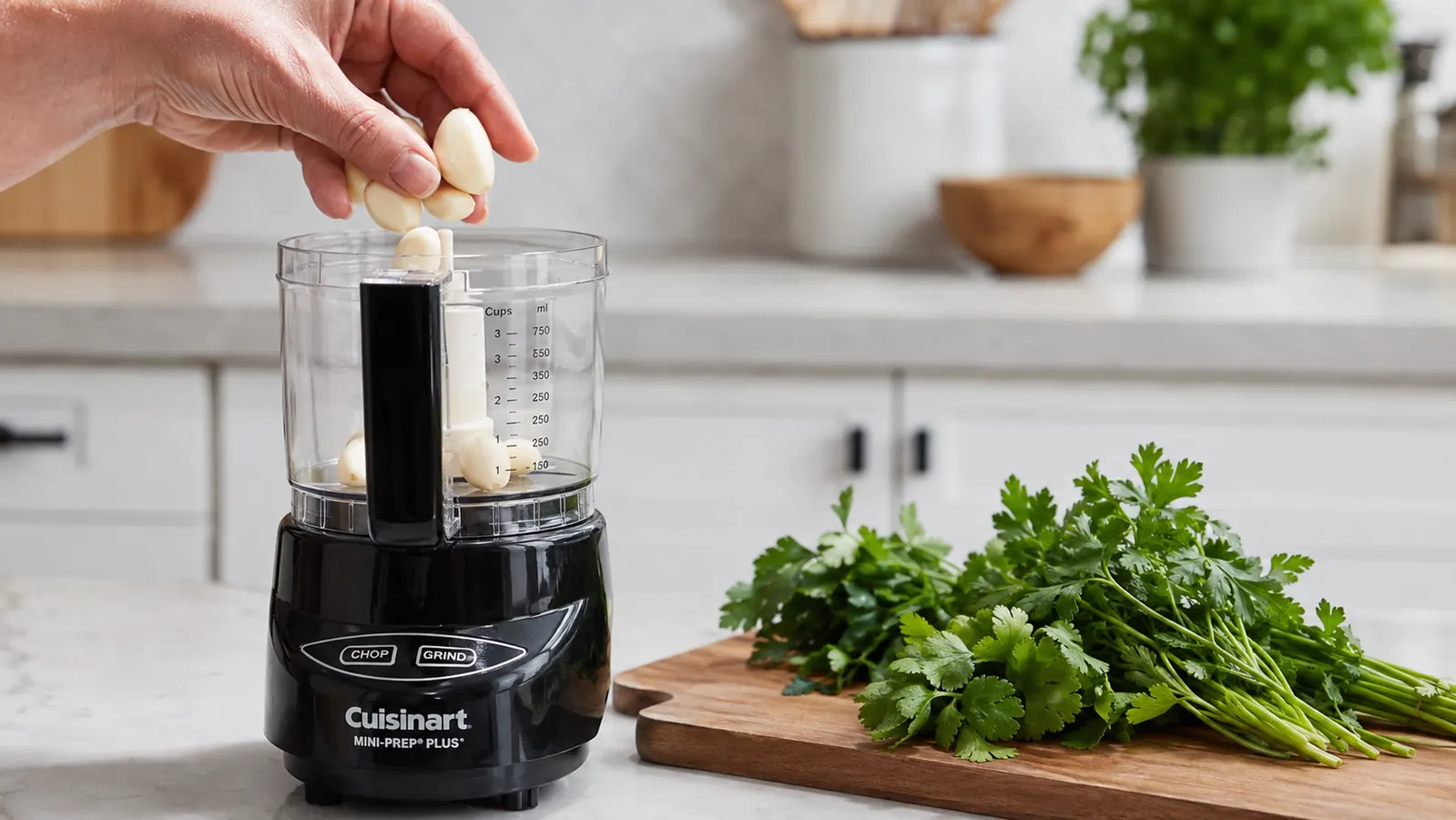
Step 2: Pulse in short bursts instead of running continuously
This is the step that separates a fine, even chop from a wet green paste, and it's the one I got wrong the first few times I used a food processor for herbs instead of a knife. Holding the button down and letting the motor run continuously overworks soft leaves fast, since there's nothing to slow the blade down once it catches the herbs. One-second pulses give the leaves a chance to fall back down into the blade's path between hits instead of getting flung against the sides and staying there half-chopped.
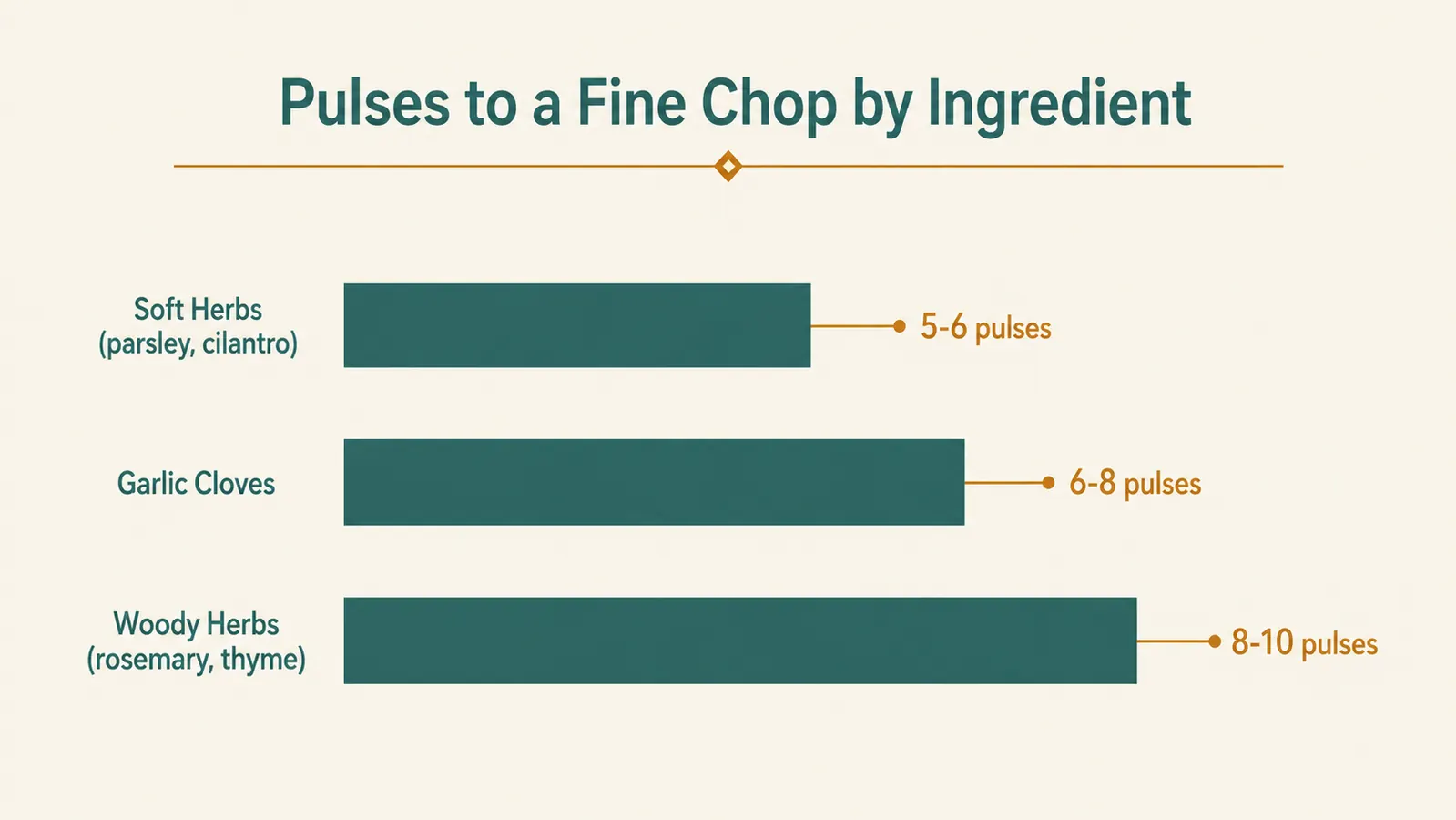
For a loose bunch of parsley or cilantro, five to six one-second pulses is usually the whole job. I count them out loud sometimes, mostly so I don't lose track and drift into pulse number ten without noticing, which is exactly how a fine chop turns into something closer to a puree. Garlic needs a few more, closer to six to eight pulses, since whole cloves start out denser and take longer to break down evenly than leaves do.
Woody herbs, rosemary and thyme especially, sit at the other end of the range, closer to eight to ten pulses, because their stiffer leaf structure resists the blade longer than something soft like basil does. I check after every two or three pulses on anything I haven't chopped in this machine before, since a few seconds of extra processing on a batch this small is the difference between fine and pureed, and there's no undoing it once it's gone too far.
Step 3: Keep garlic and delicate herbs separate
It's tempting to dump everything into the bowl at once, garlic and herbs together, and pulse the whole mix in one pass. I did that for a while, and the result was almost always garlic that was still a little chunky sitting next to herbs that had gone past fine into mushy, because the two ingredients need a different number of pulses to reach the same texture.
What works better is processing the garlic first, on its own, until it's broken down the way a recipe wants it. Then I scrape it out into a small bowl, wipe the work bowl if needed, and run the herbs in a separate pass. It's an extra thirty seconds of hands-on time, but the payoff is a garlic mince and an herb chop that both come out the texture I actually wanted, instead of splitting the difference and getting neither one right.
The one exception is when a recipe genuinely wants garlic and herbs combined into a rough paste together, a chimichurri or a simple herb-garlic rub for chicken. In that case, running them together on purpose, with a splash of oil added partway through, is the whole point, and the Cuisinart handles that combined job just as easily. The separation only matters when you want each ingredient to keep its own distinct texture in the final dish.
Step 4: Scrape down the sides between pulses
A 3 cup bowl is small enough that herbs climb the sides fast, especially in the first two or three pulses before everything settles. Leave that stuck-on layer alone and it stays whole while the center of the bowl turns fully into a fine chop, so I stop after the first couple of pulses, pop the lid, and scrape the sides down with a small rubber spatula before continuing.
I only fill the bowl about halfway for herbs, even though it's rated for 3 cups. A fuller bowl means more surface area pressed against the sides and less room for the leaves to actually fall and get caught by the blade, which means more pulses to reach the same result and more scraping in between. Two smaller batches chop faster and more evenly than one bowl packed to the rim.
This is also where a clear work bowl earns its keep. I can watch the herbs settle after each pulse and judge exactly when they've gone from loosely chopped to fine without opening the lid every time, which saves a step and keeps the whole process moving instead of stopping to check after every single pulse.
Step 5: Stop before it turns to paste
There's a specific point, usually right around the pulse count from step two, where a fine chop still looks like distinct little pieces of herb and garlic, loose enough to scatter with a spoon. One or two pulses past that and it starts pulling moisture out of the leaves and clumping into something wetter and darker, closer to a paste than a chop. Once it crosses that line there's no bringing it back, so I'd rather stop a pulse early and check than run one too many.
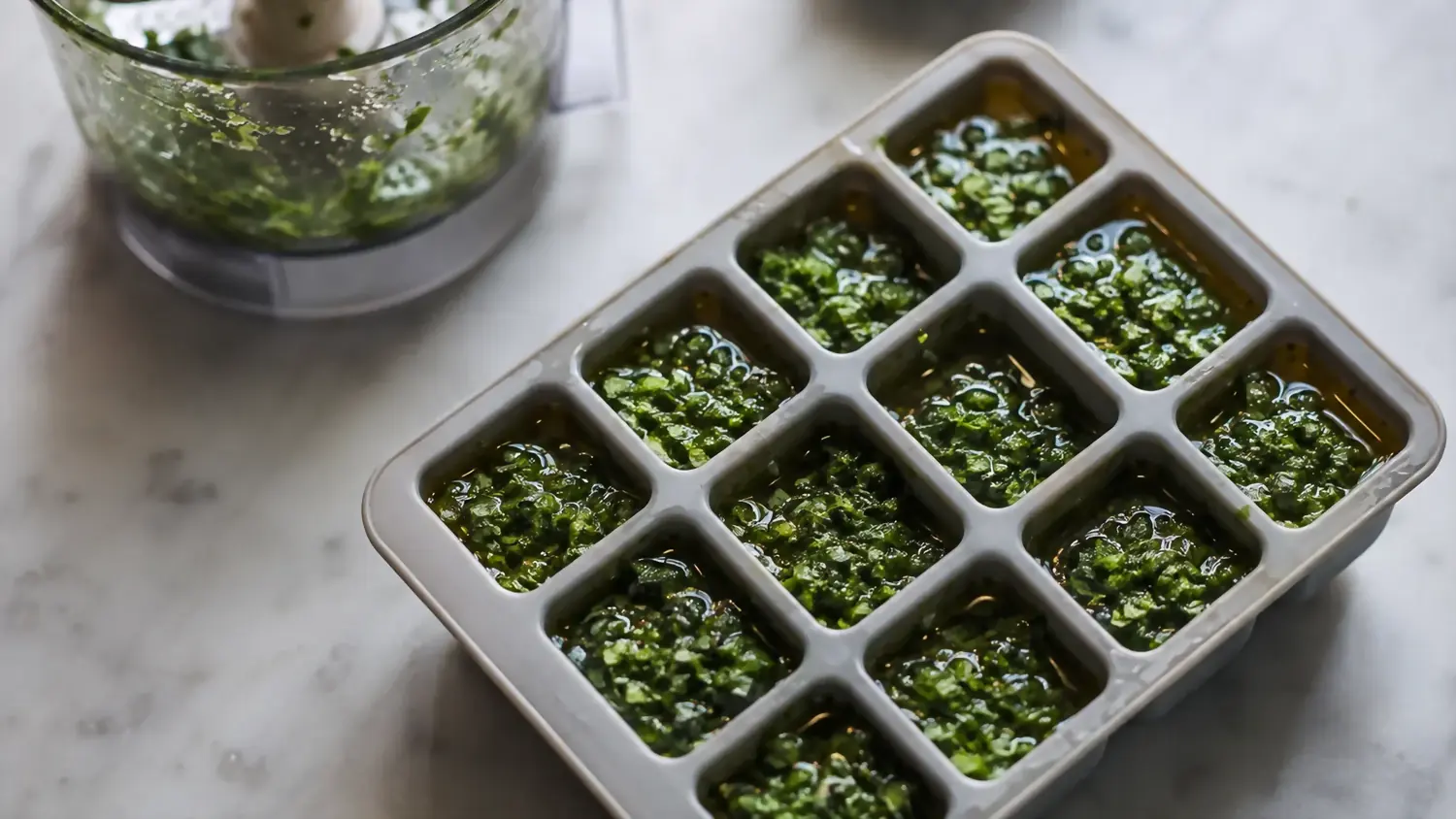
If I've chopped more than I need for that night's dinner, which happens more often than not since buying a whole bunch of parsley for two tablespoons never quite makes sense, I pack the extra into a silicone ice cube tray with a little olive oil on top and freeze it. Each cube thaws into roughly a tablespoon of ready-to-use chopped herbs, which has saved me from buying a fresh bunch for a recipe that only needed a spoonful.
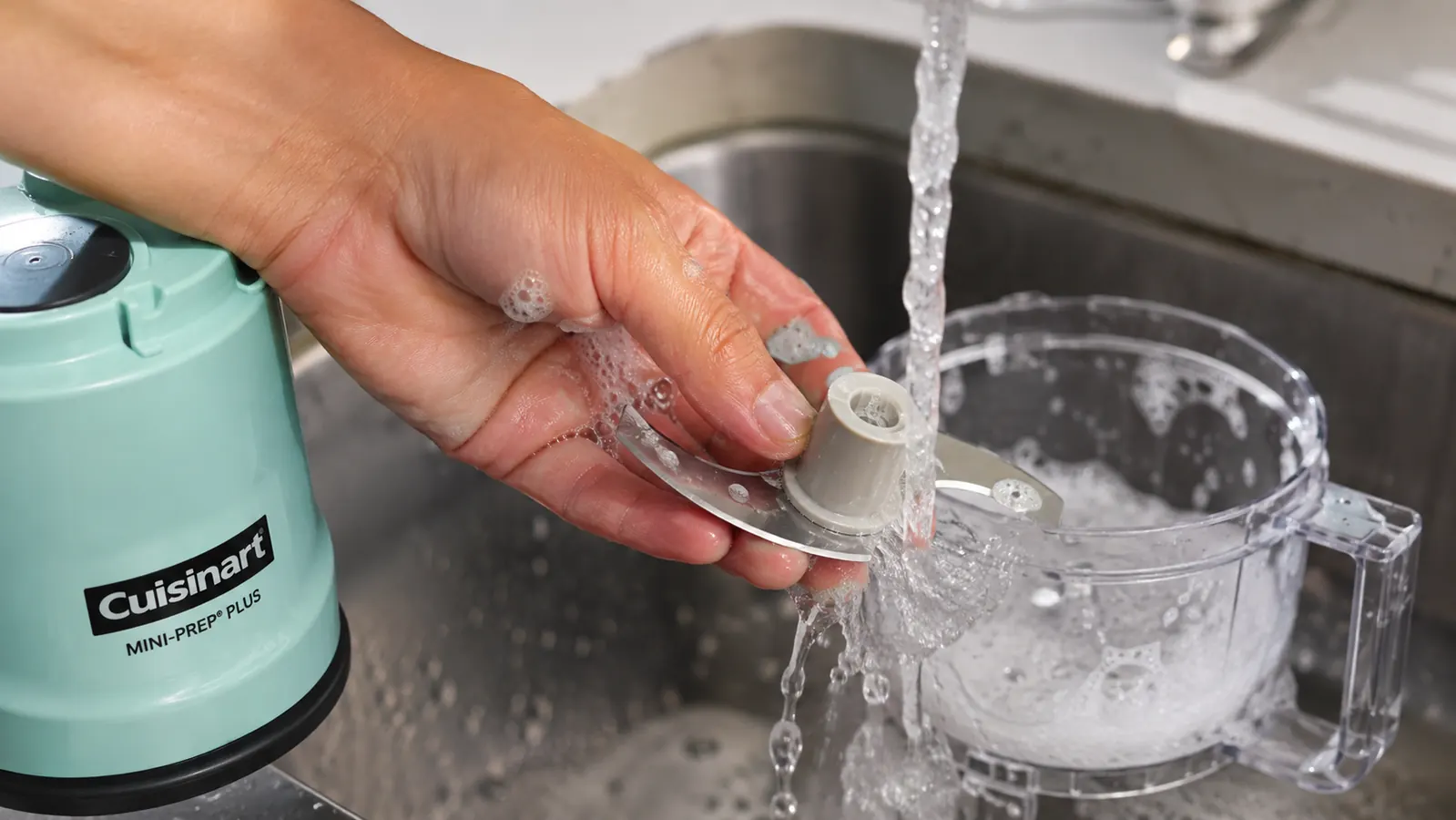
Cleanup is fast enough that I don't put it off. The work bowl and reversible blade rinse clean under warm water in under a minute, since nothing sticky has had time to dry onto them yet, and both go in the dishwasher on the top rack if I'd rather not hand-wash. I keep the blade in the bowl rather than loose in a drawer, mostly so I stop nicking myself reaching past it for something else.
What Else Helps
A few habits outside the five steps make the whole routine smoother. I keep the Cuisinart's base plugged in and sitting on the counter rather than stored in a cabinet, because a tool that takes thirty extra seconds to dig out gets used less than one that's already sitting there when a recipe calls for a quick mince. I also keep a small stack of the reversible blade nearby so I'm never hunting for it separately from the bowl.
If you're deciding whether a machine this small is worth the drawer space over a full-size processor sitting unused most nights, I laid out the tradeoffs in this comparison, including the batch sizes where the bigger machine actually wins. And if you want the case for why a mini processor earns a permanent spot on the counter instead of getting shuffled into storage, that's covered in ten reasons it holds its ground against everything else competing for the same six inches of space.
None of these steps require anything beyond the machine itself, a spatula, and a little attention to pulse count. The habit that's actually changed my weeknight cooking is smaller than any single step: I stopped saving the herb chop for last. Now it's the first thing I do when a recipe starts, before the pan is even hot, since it takes less time than waiting for oil to warm up.
For the honest version of where this machine falls short, the bowl seams that trap the smallest herb pieces and the noise it makes on a hard countertop, I go through all of that in the full honest review. It isn't a perfect tool. It's just faster and less smelly than the alternative it replaced.
It didn't teach me knife skills. It just made knife skills optional for the boring half of dinner prep.
One bowl, one blade, no more garlic hands
If chopping herbs and mincing garlic by hand is the part of dinner you keep putting off, the Cuisinart Mini-Prep Plus handles both in a handful of pulses with the routine described above. Check today's price on Amazon.
Amazon Check Today's Price on Amazon →