
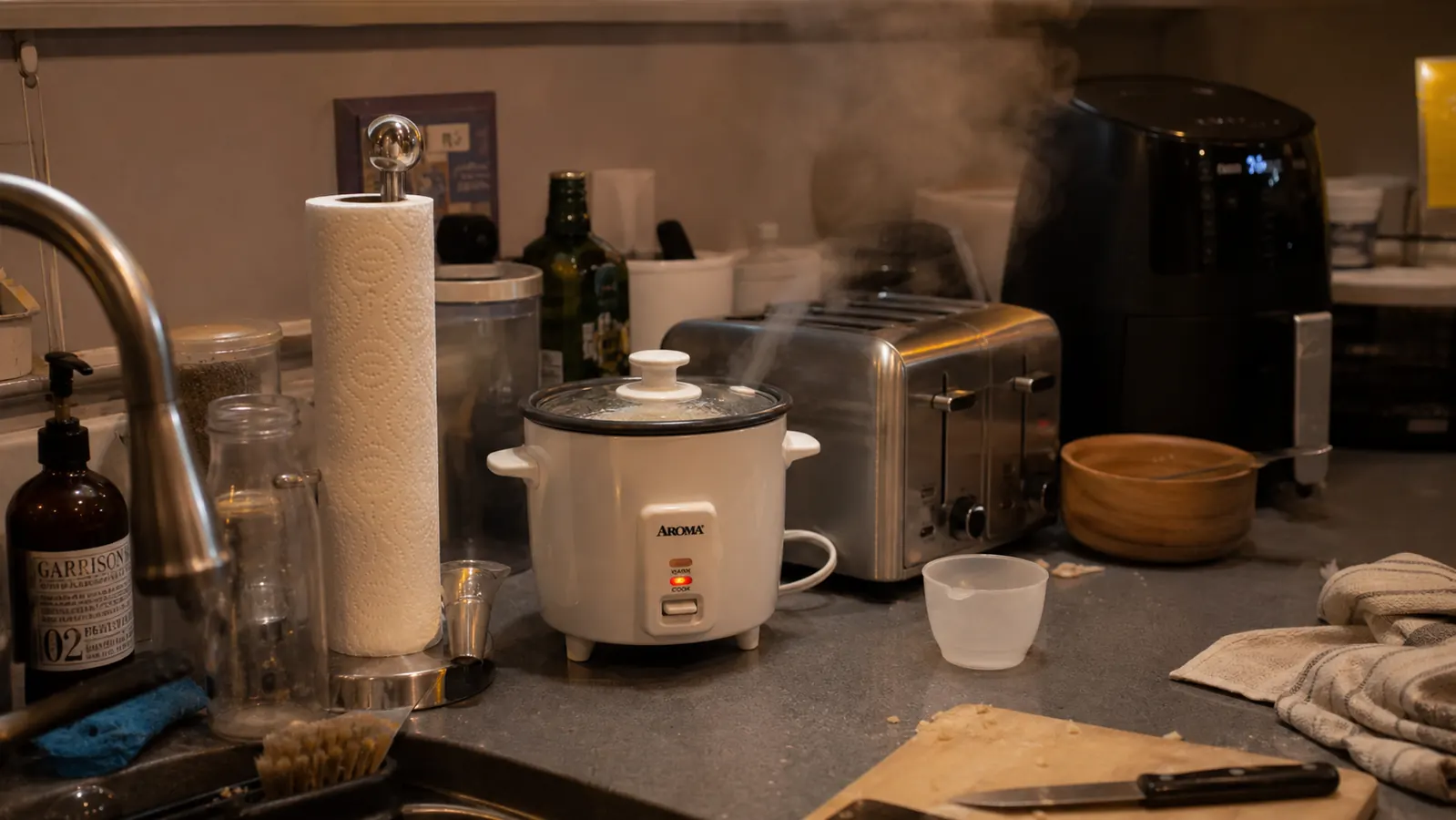
The little plastic cup that comes inside the box for the Dash Mini Rice Cooker is not a cup. Not by any normal kitchen measurement. It holds about three quarters of a standard measuring cup, and nothing on the box or in the folded paper insert explains that clearly enough to stop you from guessing wrong the first few times you use it. I found this out the hard way, measuring two of what I assumed were cups, getting rice that came out soft and over hydrated, and blaming the machine for a week before I actually measured the little cup against a real one.
That's the kind of detail this review is for. Six months and one very close read of the manual after I bought the Dash, I've got a running list of things that never showed up in the five-star reviews or the product photos, the stuff that only surfaces once you've used the thing on a Tuesday night when you're tired and just want dinner. None of it is disqualifying. Some of it changed how I use the cooker for the better. But I wish someone had told me before I unboxed it, so I'm telling you now.
The Quick Verdict
The Dash Mini Rice Cooker works, and works well, but it ships with a handful of unmarked quirks, an undersized measuring cup, a plastic smell on the first cycle, foam that can push past the vent hole if you skip rinsing, that nobody flags until you've already found them yourself.
Amazon Check Today's Price →Before you measure your first cup wrong like I did, know what you're actually buying
See today's price and current availability for the Dash Mini Rice Cooker on Amazon, and read the fine print I didn't.
Amazon Check Today's Price on Amazon →How I Actually Tested This
I didn't test this against a spec sheet. I tested it against every one-star review I could find before I bought it, the ones buried under the five-star average that say things like 'smells weird' or 'measuring cup lies' without much explanation. I wanted to know if those complaints were real or just a handful of unlucky units, so I used the cooker daily for six months and kept a running note on my phone every time something surprised me, good or bad. This review is that list, cleaned up.
That's a different exercise than reviewing a rice cooker with fresh eyes. I already knew going in that this thing has a devoted following and a genuinely good reputation among people who cook for one. What I wanted to find out was what the marketing photos leave out, the stuff that's true of the actual product sitting on my counter rather than the version on the listing page.
So this isn't a review of whether the Dash cooks rice, because it does, reliably, and I'm not interested in relitigating that. It's a review of the parts that took me by surprise, the ones a five-minute skim of the top reviews wouldn't have caught.
I also cross-checked what follows against my own long-term notes, since it would be strange to publish two pieces about the same pot that quietly contradict each other. Read together, one covers the long arc of daily use and this one covers the specific rough edges that only show up if you go looking for them, on purpose, the way I did once the surprises started piling up.
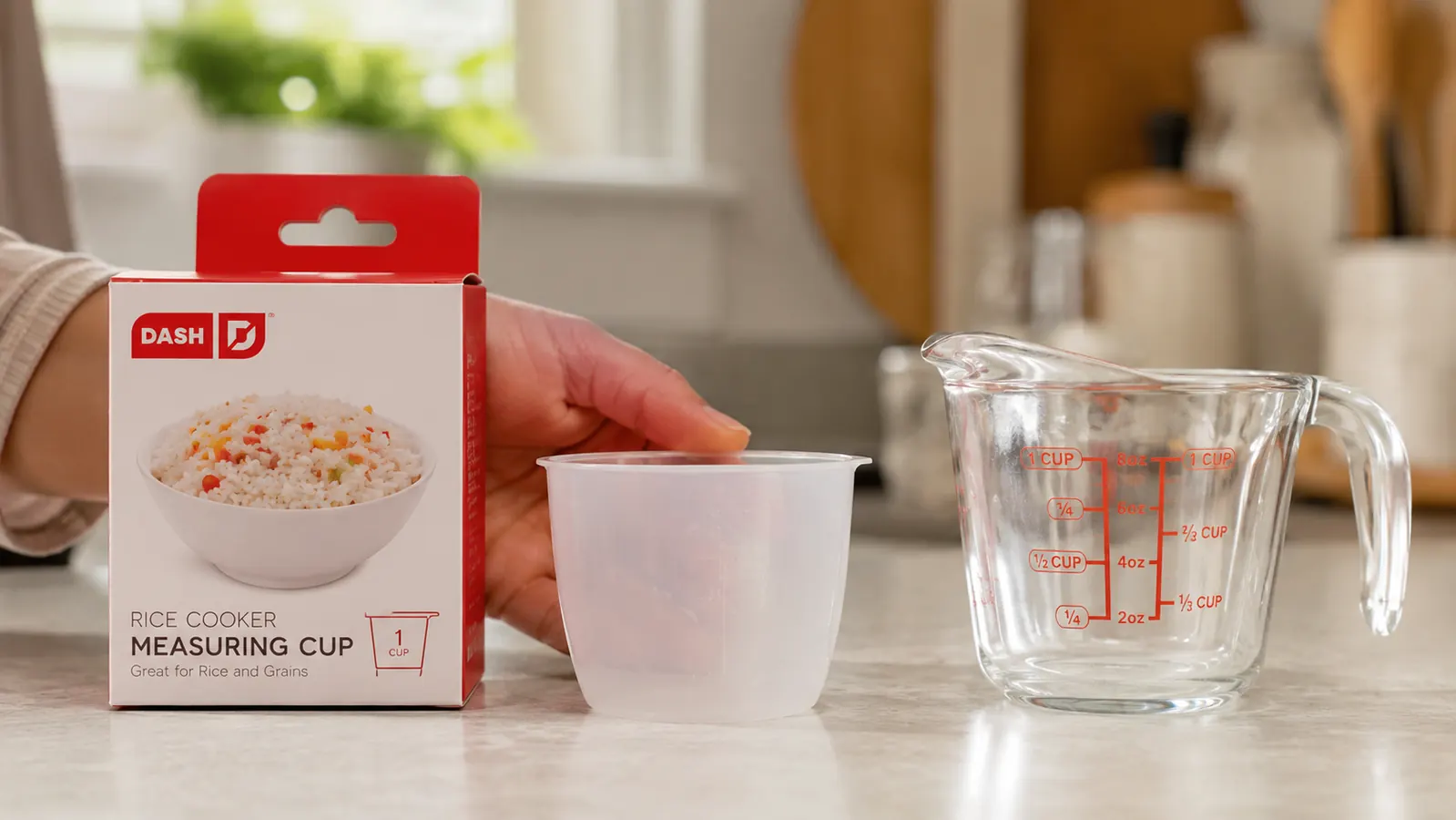
The Cup That Isn't a Cup
Start with the measuring cup, because it's the first thing you touch and the first thing that can go wrong. The cup that ships with the Dash is sized to match rice cooker convention, not the measuring cups already sitting in your kitchen drawer. It's smaller, closer to three quarters of a standard cup than a full one. If you reach for your own glass measuring cup out of habit instead of the one in the box, you'll add roughly a third more water and rice than the recipe intends, and the result is soft, slightly gummy rice that isn't the machine's fault at all.
I made this mistake for the first week and assumed the ceramic pot or the timing was off. It wasn't. Once I started using only the cup that came in the box and stopped reaching for the one in my drawer, results were consistent from the first cook onward. This should be printed somewhere obvious, on the pot itself or the base, not buried in a paper insert that's easy to toss with the packaging before you've even read it.
The fix is simple once you know it, and now that I know it, I don't think about it anymore. But it's exactly the kind of thing that gets a rice cooker returned as defective when the machine did nothing wrong. If you buy one of these, keep that little cup and treat it as the only correct measuring tool for this specific pot, not a stand-in for the ones you already own.
The Smell, the Steam, and the Heat
The first time I ran the Dash, empty, just water, to rinse it out before actual use, it put off a faint plastic smell for the first few minutes of the cycle. It wasn't strong and it didn't carry into the food once I started cooking real rice, but nobody mentions it in the listing photos, and if you're sensitive to that kind of thing, it's worth running an empty cycle or two before your first real meal instead of getting surprised by it while you're hungry.
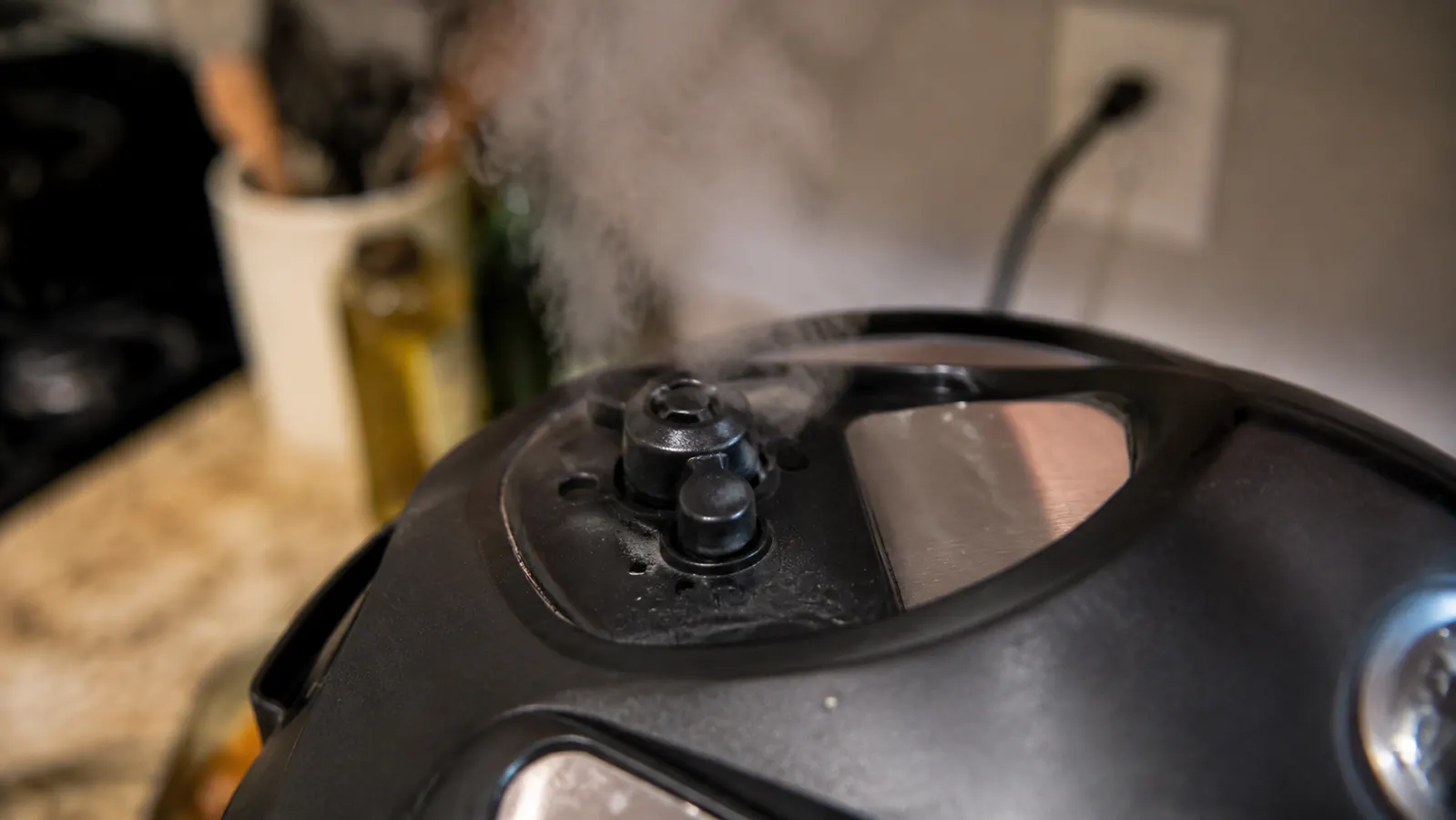
Steam is the other thing. The vent on the lid puts out a real, visible stream partway through the cycle, enough that I stopped setting the cooker directly under my upper cabinets after the underside of one started collecting condensation. It's not dangerous, just something to plan six inches of clearance around, which the product photos, all shot with generous open counter space, don't prepare you for.
The base gets warmer than I expected during a full cycle, too. I stopped setting it directly on a folded dish towel, which was my instinct out of old stovetop habit. Towel fabric doesn't damage anything, but it traps heat against the counter longer than open air does, and on laminate that retains heat, that's not a risk worth taking every night. A cork trivet or a silicone mat underneath solves it completely, and it's a habit worth starting on day one instead of after the fact.
The steam vent itself gets hot enough to notice if you reach past it checking on the rice mid cycle, not burn-level hot, but enough that I've learned to lift the lid from the handle side rather than reaching over the vent opening. None of this is dangerous with normal handling, but a first-time owner reaching in the way they might with a stovetop pot could get an unpleasant surprise once.
As for sound, it's quieter than I expected going in, closer to a soft hum with an occasional light bubbling near the end of the cycle than anything that would carry into the next room. That part is a genuine positive, and one of the few things here that matched the marketing without any caveat attached.
One Button Means One Button
The single-button design gets praised constantly in reviews, mine included when I wrote about six months of daily use elsewhere on this site. What doesn't get said as often is what you give up for that simplicity. There's no brown rice setting, no delay start, no timer you can check from across the room. It's one button, one program, and the machine decides when it's done based on temperature, not on what kind of grain you dropped in.
For white rice, that's fine, the program is tuned well for it. For brown rice, you're working around the machine rather than with it, since it runs the same cycle logic and just happens to land at a longer total time because brown rice takes longer to hit the temperature threshold. It gets there, but there's no mode telling it to expect a tougher grain, and results are a shade less consistent on brown rice than on white as a result.
If you're the kind of cook who wants a dial, a screen, or the ability to set a start time before you leave the house, this isn't that machine, and no amount of getting used to it changes that. It's a tool built around doing one thing without asking you anything, and that's a real tradeoff, not just a style choice you'll stop noticing.
The Foam Nobody Warns You About
Certain batches of rice, particularly the starchier short-grain kind, foam up more than others while cooking. If you skip rinsing the rice before you cook it, that foam can rise high enough to push past the vent hole on the lid and drip down the outside of the base. It happened to me twice in six months, both times with rice I'd grabbed straight from the bag without rinsing because I was in a hurry and told myself it wouldn't matter.
It's a small mess, a few drops on the counter, not a flood, and it wipes up in seconds. But it's also completely avoidable, and nothing in the manual makes clear that a thirty-second rinse under the tap is the actual fix. I now rinse every batch without exception, and I haven't had it happen since. It's a habit worth building before it costs you a wiped-down counter on a night you don't have the patience for one more chore.
I mention this because it's exactly the kind of complaint that shows up in the one-star reviews worded as 'leaks' or 'overflows,' like a defect, when in most cases it's a rinsing step getting skipped. Knowing the actual cause changes how you use the machine instead of how you feel about it.
Jasmine and basmati foam up less in my experience, so if foam has been an issue for you, it might be worth switching the type of rice you default to rather than assuming the machine itself is unreliable. Small grain, high starch varieties are the ones to rinse without exception, every time, no shortcuts.
Cord, Footprint, and What It's Actually Like to Own
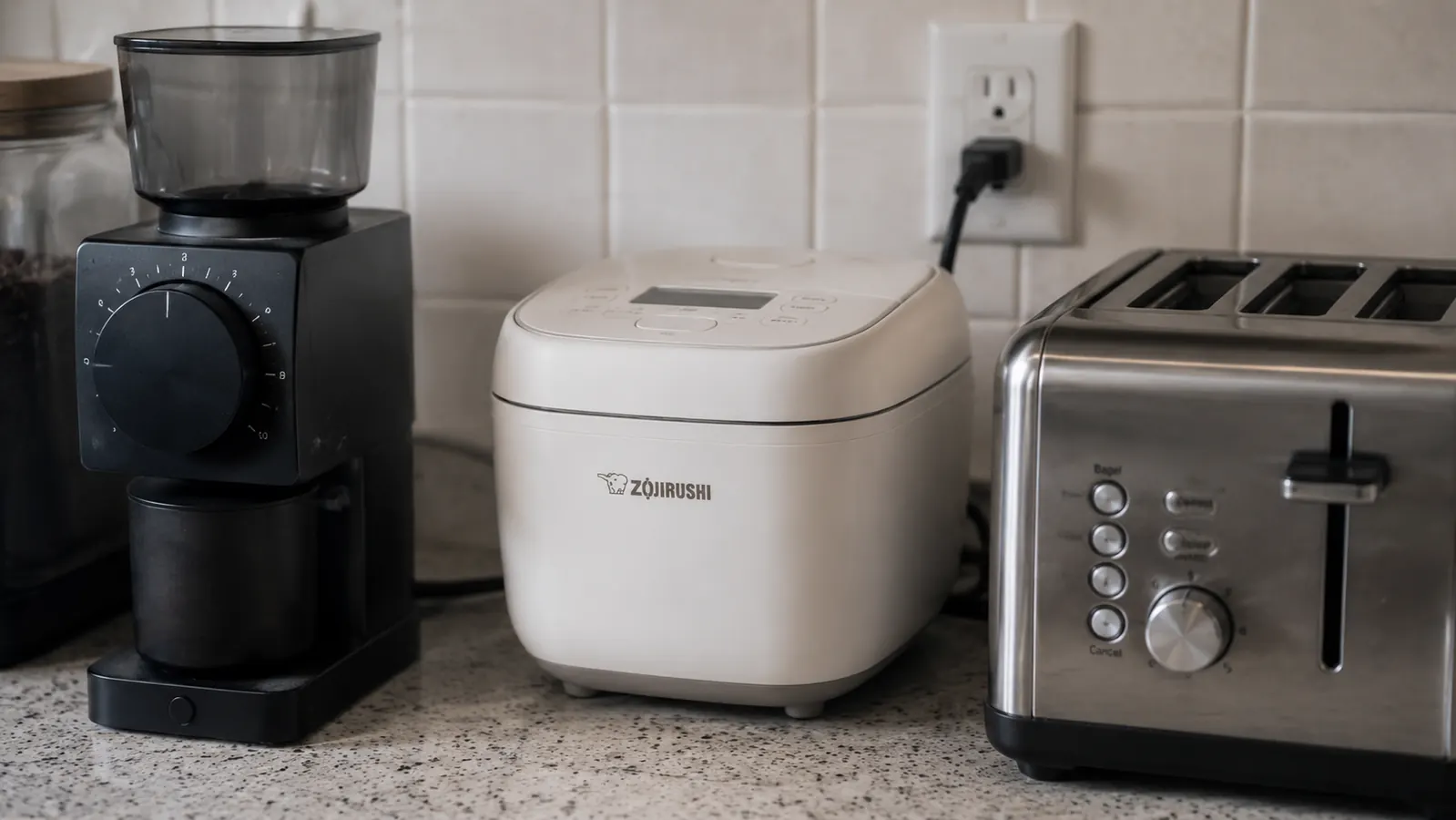
The cord is short, somewhere around two feet from the base to the plug, which mattered more than I expected once I actually tried to place the Dash on my counter. If your nearest outlet isn't within arm's reach of where you want the cooker to sit, you're either rearranging your counter layout or running an extension cord, and product photos never show the cord at all, so this is easy to miss until it's already in your kitchen.
The footprint itself is genuinely small, small enough that it tucks in next to a coffee grinder and a toaster without crowding either one, which is the whole reason a mini rice cooker exists in the first place. On balance, once I adjusted for the cup, the rinsing habit, and where I plugged it in, the day to day experience of owning the Dash has landed closer to good than to the mixed picture some of the early one-star complaints suggested. The issues are real, but every one of them is solvable once you know about it, which is the entire point of writing this down instead of letting you find each one the way I did, one surprise at a time.
What I Liked
- Quiet operation, closer to a soft hum than the buzzing whir of cheaper small appliances
- Compact enough to sit next to other small appliances without crowding a small counter
- Consistent results on white rice once you use the included cup and rinse first
- The foam and overflow complaints in early reviews trace back to a fixable habit, not a defect
Where It Falls Short
- The included measuring cup is smaller than a standard cup and isn't clearly labeled as different
- Faint plastic smell on the first empty cycle that isn't mentioned anywhere in the listing
- No brown rice setting, delay start, or timer, just one button and one program
- Cord is short, around two feet, which limits where it can sit on the counter
- Steam vents visibly enough that it shouldn't sit directly under low cabinets
Most of what frustrated me about this rice cooker in the first two weeks wasn't the machine. It was information nobody bothered to hand me before I plugged it in.
Who This Is For
If you want a small, quiet rice cooker and you're willing to spend fifteen minutes learning its specific quirks instead of expecting it to behave like every other kitchen tool you own, the Dash earns its place. It rewards a little patience up front with genuinely low-effort meals afterward, and once you know to rinse the rice and use the cup that came in the box, most of what I've described here stops being a problem you think about at all. I still think it's a smart buy for someone cooking for one or two on an unpredictable schedule, and I said as much in my longer six-month review of daily use, which covers the day-to-day case for it in more detail than the honest gripes here do.
Who Should Skip It
If you want a rice cooker with a brown rice setting, a delay timer, or any kind of digital control, look elsewhere, because this one genuinely doesn't offer any of that and isn't going to surprise you with a hidden menu. If unmarked quirks bother you more than they interest you, or you don't want to spend your first week troubleshooting a machine that turns out to be working exactly as intended, it might not be worth the learning curve. I put together a full comparison against the Aroma model if you want to weigh a different set of tradeoffs before deciding, and the broader case for this size of cooker if you're still deciding whether a mini rice cooker makes sense for your kitchen at all. For the exact steps that solved most of what I've complained about here, I wrote them out plainly in a step-by-step guide to cooking rice for one, and if you want the more personal version of how I landed on this cooker in the first place, that's in the story of how it fixed my weeknight dinners.
Know the quirks going in, and this one is easy to love
Check today's price on the Dash Mini Rice Cooker and see if it's in stock for your kitchen.
Amazon Check Today's Price on Amazon →