
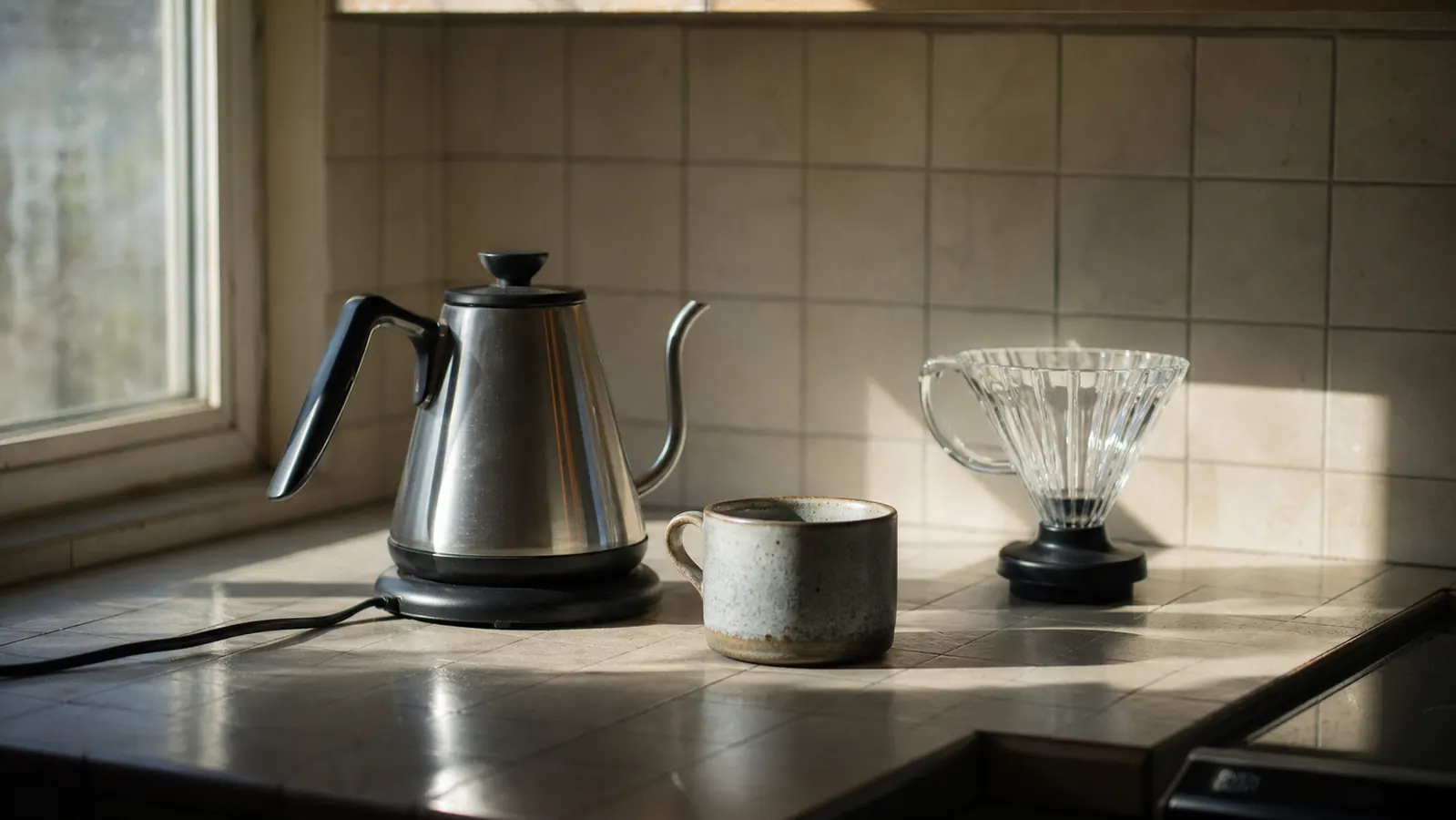
For the first two years I made pour-over coffee, I used whatever kettle happened to be on the stove, a scratched stainless number that came free with a camping set. It boiled water. That was the whole review. Then I bought the Willow & Everett gooseneck kettle because a friend of mine would not stop bringing it up, and the coffee changed enough that I noticed on the first cup, not the tenth. I make coffee at strange hours, sometimes early before the day gets away from me, sometimes late when I know better. A basic kettle never cared what time it was. This one does, in the sense that it actually lets me control the pour instead of dumping water on the grounds and hoping for the best. It sounds like a small upgrade until you've lived with the alternative for two years and just accepted uneven coffee as normal.
This is not a roundup of ten different products. It is one kettle, the Willow & Everett gooseneck model I've used most mornings for months, looked at from ten angles so you can see whether it earns a spot in a kitchen like mine before you give up counter space to it. None of these ten reasons are dramatic on their own. Together they're the reason it's the only kettle left in my cabinet. If you want the full grind-by-grind breakdown, I wrote that up separately in my long-term review.
Stop pouring blind and start pouring on purpose.
A pour-over is only as good as the stream that hits the grounds. See what the gooseneck spout and temperature presets actually do to your coffee before you buy another bag of beans to fix a problem that was never the beans.
Amazon Check Today's Price on Amazon →The Spout Actually Aims
Every kettle I owned before this one poured in a splash, not a stream. The gooseneck neck on the Willow & Everett kettle narrows the water into something I can steer, so it lands where I want on the grounds instead of blowing a crater in the middle of the bed. I did not expect a spout shape to change how coffee tastes, but a slower, aimed pour extracts more evenly, and the difference showed up in the cup within a week, not a month. It's the kind of thing you don't notice you were missing until you finally have it.
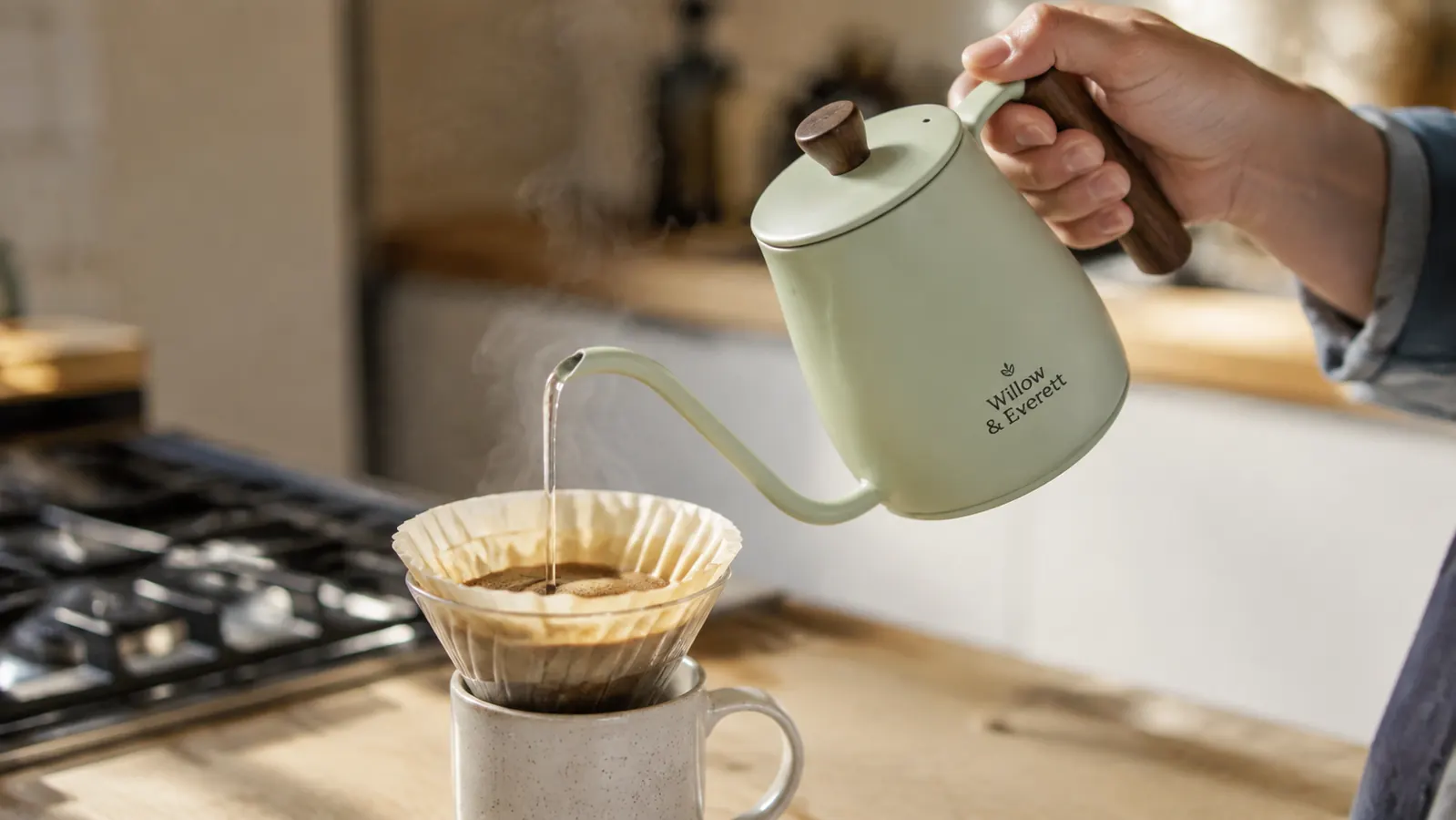
Temperature Presets Remove the Guessing
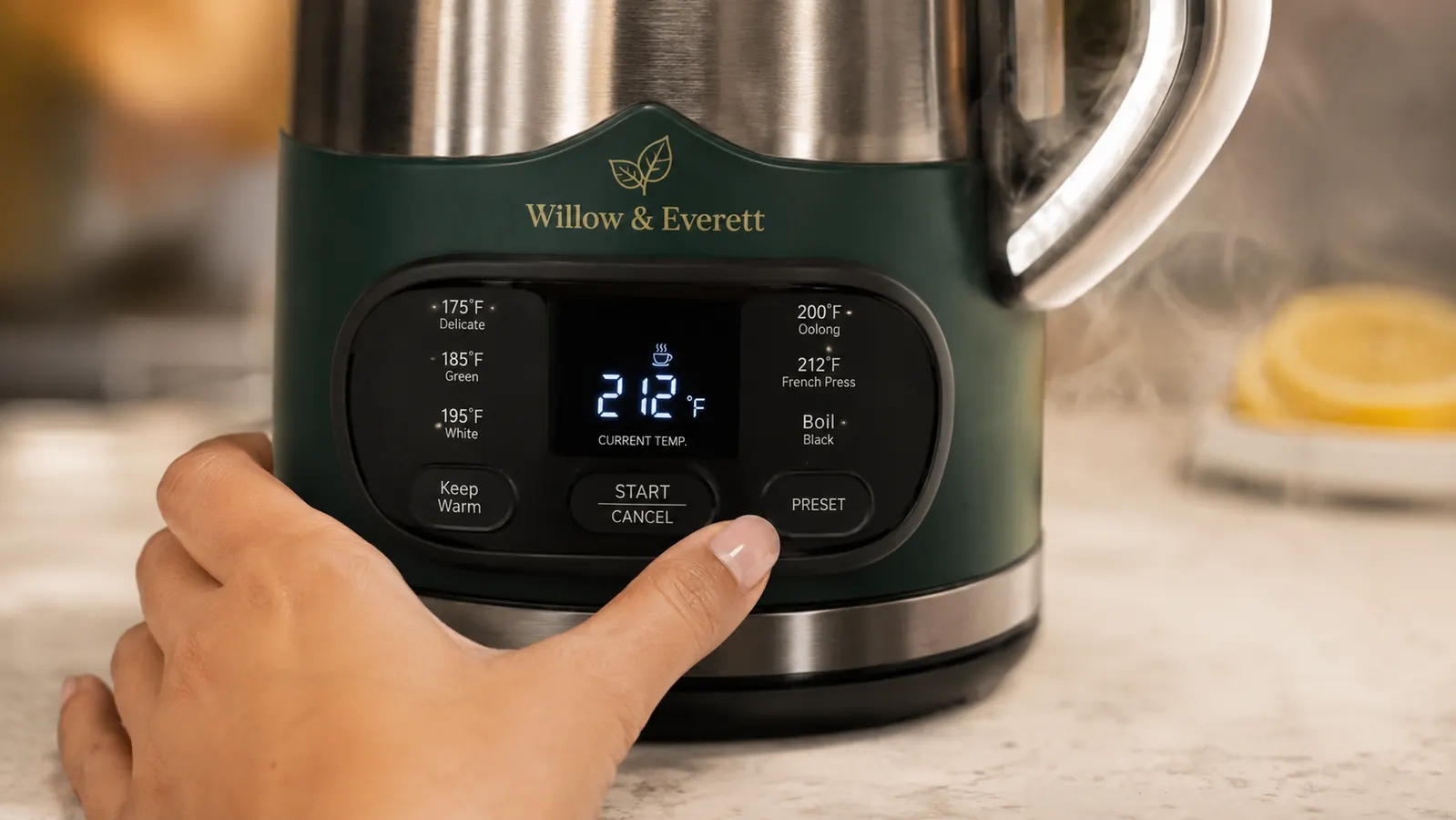
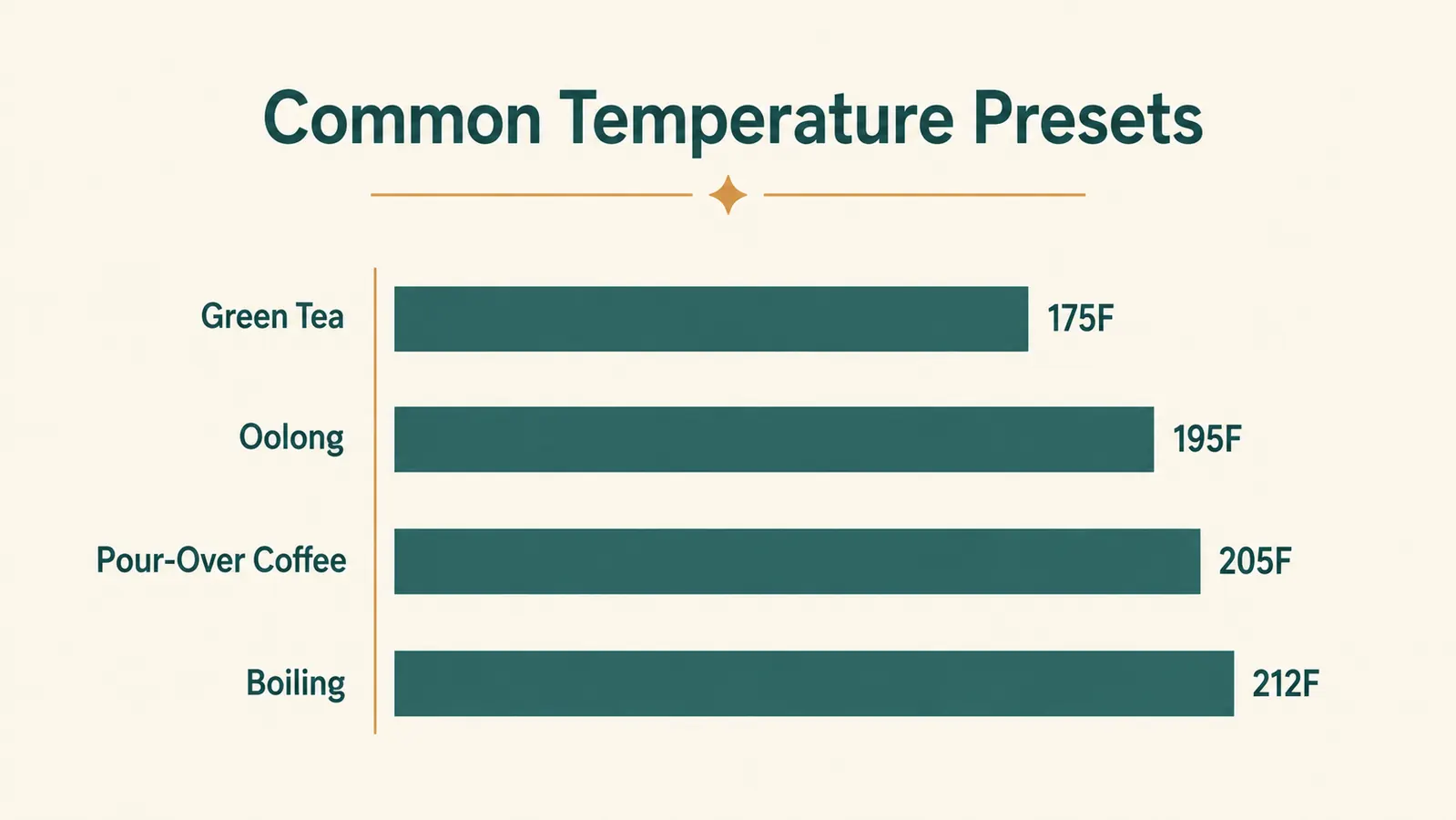
I used to eyeball water temperature by how hard it was bubbling, which is a bad method for coffee and a worse one for green tea, which scalds if you're not careful. This kettle has presets so I pick the drink, not a number I'm supposed to remember. If you're deciding between an electric kettle like this one and a stovetop model entirely, that's a separate question and I answer it directly in this comparison.
Keep Warm Matters More Than I Thought
Mornings rarely go in a straight line. I'll get the water heated, then get pulled away for five minutes by something that cannot wait, and come back to find a basic kettle has gone cold and I'm starting over. The keep-warm setting holds the temperature instead of just shutting off, so the coffee I actually make still tastes like the coffee I planned to make, even when the plan falls apart halfway through.
It Heats Fast Enough Not to Test My Patience
From a cold fill to a pour-over temperature takes roughly three to four minutes in my kitchen, which is close enough to my old kettle that I don't notice waiting, but the water actually stops where I told it to instead of running away to a rolling boil. For coffee, that four or five degree difference is the gap between bright and bitter.
0.8 Liters Is Honest, Not Stingy
I live alone most mornings and make one to two cups, so a kettle sized for a household of six was always going to sit half full and take too long to heat. The 0.8 liter capacity fills fast, empties fast, and doesn't leave me boiling water I'm going to pour down the drain. For the exact ratios and pour timing I use with it, see my pour-over guide.
One-Handed Pour Without the Wrist Ache
A full kettle held at a pour angle for ninety seconds straight will find any weakness in a handle. The balance point on this one sits close enough to the base that I can hold a slow, steady stream without my wrist locking up halfway through, which used to happen constantly with a cheaper stovetop kettle I eventually gave away.
It Does Tea Just as Well as Coffee
I bought this for coffee and kept it for tea. Green tea at full boil turns bitter and grassy, and I used to just accept that as how green tea tastes. With a preset that stops well short of boiling, the same Willow kettle that handles my morning pour-over also handles a proper afternoon cup without me thinking twice about it or dragging out a second appliance.
The Display Isn't a Gimmick
No app, no bluetooth pairing, no setup step before I can use it. It's a small digital readout on the base with buttons for the presets, and I can use it half asleep. I've owned kitchen gadgets that needed a phone to function properly, and every one of them eventually got put in a drawer because the extra step was one step too many at six in the morning.
Cleanup Takes About Thirty Seconds
No basket, no reservoir, no seal to pick food out of. I rinse it, wipe the spout with a finger if there's mineral residue building, and it's done. Compare that to a drip machine with a carafe and a filter basket to wash every single day, and the time adds up faster than people expect. I tell the whole backstory of switching kettles, carafe and all, in this piece.
It Doesn't Need Its Own Zone on the Counter
My counter space runs out before my ambition does most nights, so anything that demands a permanent footprint gets vetoed fast. This kettle's base is small enough to tuck behind the toaster and pull forward only when I need it, which is the difference between a gadget I actually use and one that becomes a shelf decoration collecting dust.
What I'd Skip
What I'd skip, if I'm honest: the mineral buildup on the base plate after a few months of hard water, which needed a vinegar rinse to clear, and the power cord, which is shorter than I expected and made me rearrange an outlet strip to reach it. Neither one changed my mind about keeping the kettle, but both would have annoyed me less if I'd known ahead of time instead of discovering them mid-week. Small stuff, but if you're deciding whether the Willow kettle is worth the space, you should know before you buy, not after. For the unfiltered version of that list, see my honest review.
A kettle that pours where I aim it is a small thing, right up until it's the only reason my coffee stopped tasting inconsistent.
Ten reasons, one kettle, no guessing left in your mug.
If your coffee has been inconsistent for reasons you couldn't quite name, there's a decent chance it was the pour, not the beans. See current availability before your next bag of coffee runs out and you're back to the old kettle by default.
Amazon Check Today's Price on Amazon →