
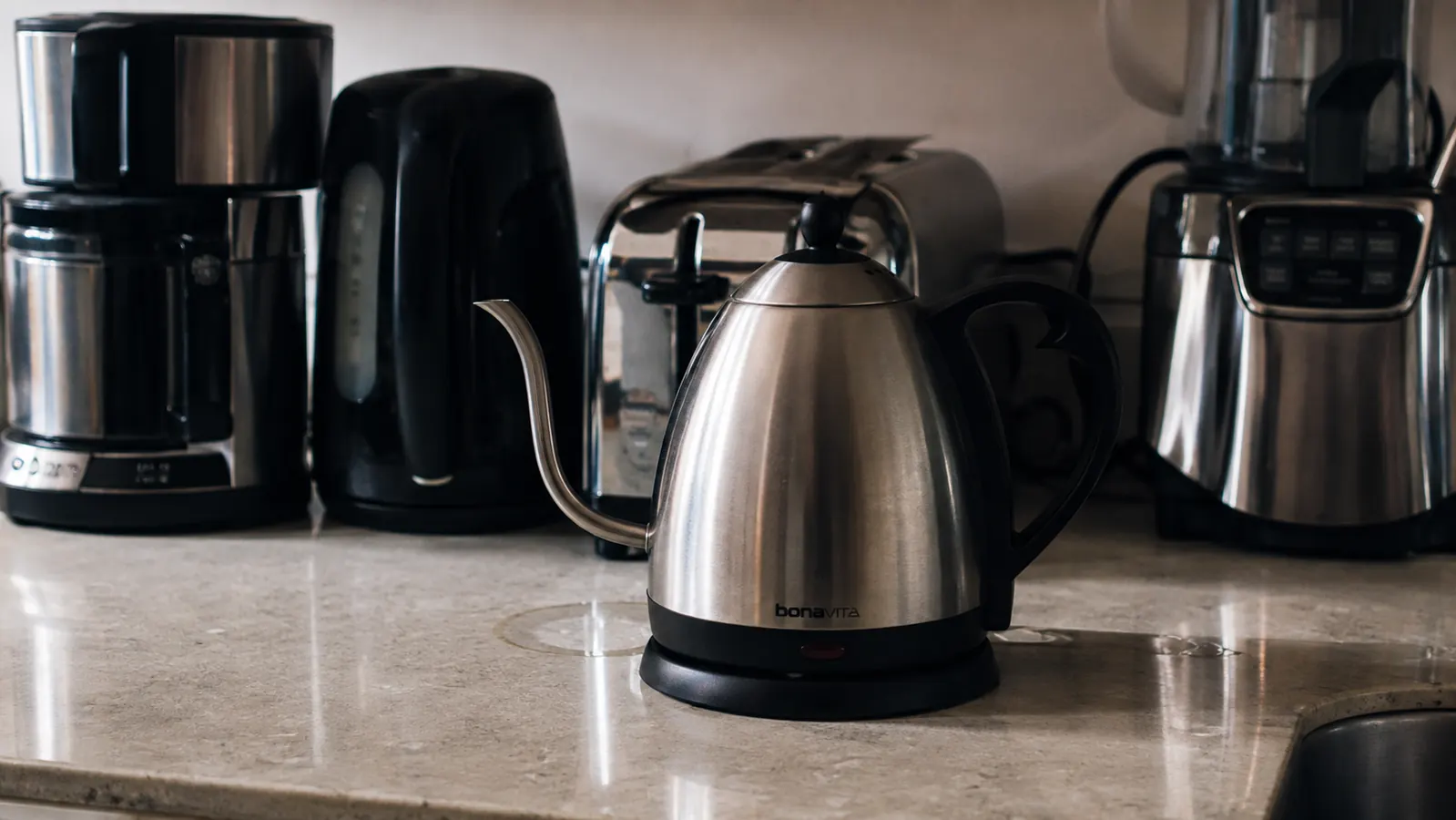
Somewhere around week three with the Willow & Everett gooseneck kettle, I stopped believing everything the temperature dial told me. Not enough to stop using it, just enough to stop trusting it blind, which is a different thing, and it's the thing nobody mentions when they're telling you a gooseneck kettle will fix your pour-over. I bought the 0.8-liter Willow & Everett kettle because my old basic electric kettle boiled everything to a rolling boil no matter what I asked it to do, and rolling-boil water poured straight onto coffee grounds tastes like a burnt matchstick. The Willow & Everett kettle mostly fixed that. But mostly isn't the whole story, and the whole story is what nobody selling you this kettle wants to spend time on.
This is the review I wish existed before I bought mine, not the six-month appreciation piece, but the list of small, specific annoyances that add up over regular use in a kitchen where the counter is already fighting for space with a toaster and a dish rack. Some of what follows will read as nitpicking. It probably is. But you're paying for a kettle that promises precision, and precision is exactly the thing worth being picky about once you've lived with it a while.
The Quick Verdict
Genuinely better than a basic kettle for pour-over, but the temperature accuracy and the keep-warm mode both fall short of what the marketing quietly implies.
Amazon Check Today's Price →Tired of Guessing When the Water's Actually Ready?
The Willow gooseneck kettle takes the guesswork out of pour-over temperature, most of the time. See today's price and current specs on Amazon before deciding if 'most of the time' is good enough for your routine.
Amazon Check Today's Price on Amazon →How I've Used It
I make coffee on a schedule that doesn't look like anyone else's. Some mornings it's early, some mornings it's late because the day before ran long, and some afternoons I make a second cup just to get through the rest of it. The Willow kettle lives on a narrow shelf above my stove, the only spot left once the rice cooker and the food processor claimed the counter, and I pull it down most days it gets used, plug it in near the one outlet close enough to reach.
The routine itself is simple. Fill somewhere between the minimum line and the max fill, pick one of the temperature presets, wait for the beep. The gooseneck spout is the actual reason I bought this over a basic model, since a wide-mouth kettle makes a slow, controlled pour close to impossible, and a fast, uneven pour is how you end up with bitter spots in the cup. On the pouring itself, the Willow delivers consistently. It's the parts around the pouring, the ones that don't show up in a five-minute demo video, where I've had the most complaints.
I've written up the longer arc of what changed after six months of using it daily, and that piece leans favorable overall. This one isn't a contradiction of that review, it's the parts of the story I didn't lead with there, because they're smaller and easier to miss unless you're specifically looking for them.
The Parts Nobody Mentions in the Marketing Photos
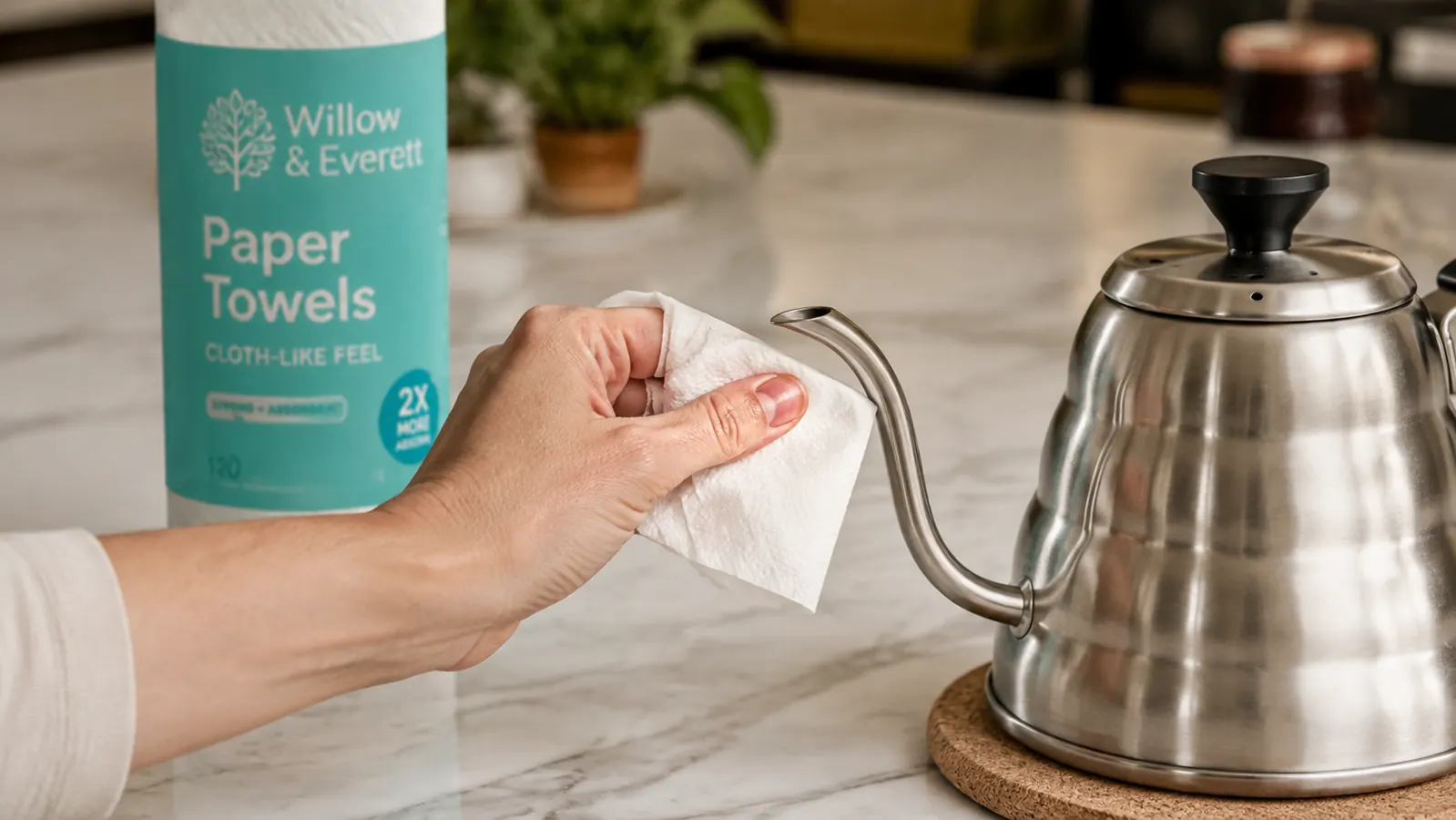
The spout drips. Not every pour, but often enough that I keep a paper towel folded next to the kettle at all times. After you tip it back upright, a bead of water tends to hang at the tip of the spout and either fall straight down onto the base or run along the underside and land on the counter a few inches away. It's a small amount, nothing close to a spill, but it happens often enough that wiping the spout has become a reflex, the same way I wipe a knife before putting it back in the block.
The base plate is the other thing nobody photographs. If you set the kettle down while the underside is even slightly wet, and it will be after a pour, it leaves a faint ring on whatever it's sitting on. On my laminate counter that ring wipes off fine if I catch it same day, but it's left a permanent shadow on the wood cutting board I foolishly used as a landing spot for the first two weeks. Now I keep a small cork trivet under it at all times, which solves the problem completely, but nothing in the box or the listing tells you to do that up front.
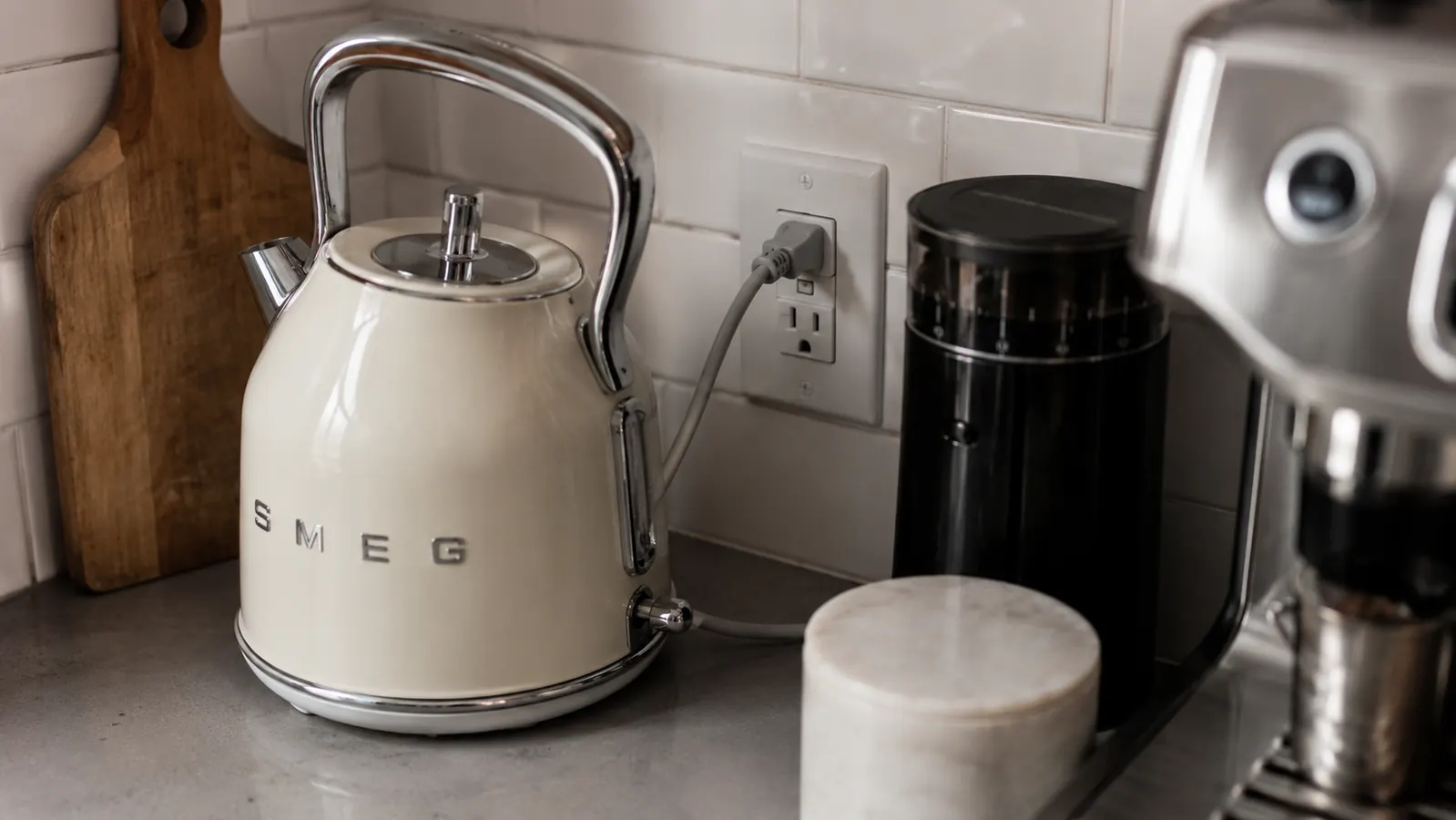
Then there's the cord, which is short, closer to two feet than three. My kitchen only has one outlet within reach of the shelf where the kettle lives, and it happens to work out, but it was closer than I expected the first time I actually measured the distance with the kettle in hand instead of just eyeballing it in the store listing. If your outlet situation is less forgiving than mine, you'll either be rearranging your layout or running an extension cord, and the product photos, all shot on generously open counters, never show the cord at all.
Where the Temperature Control Actually Falls Short
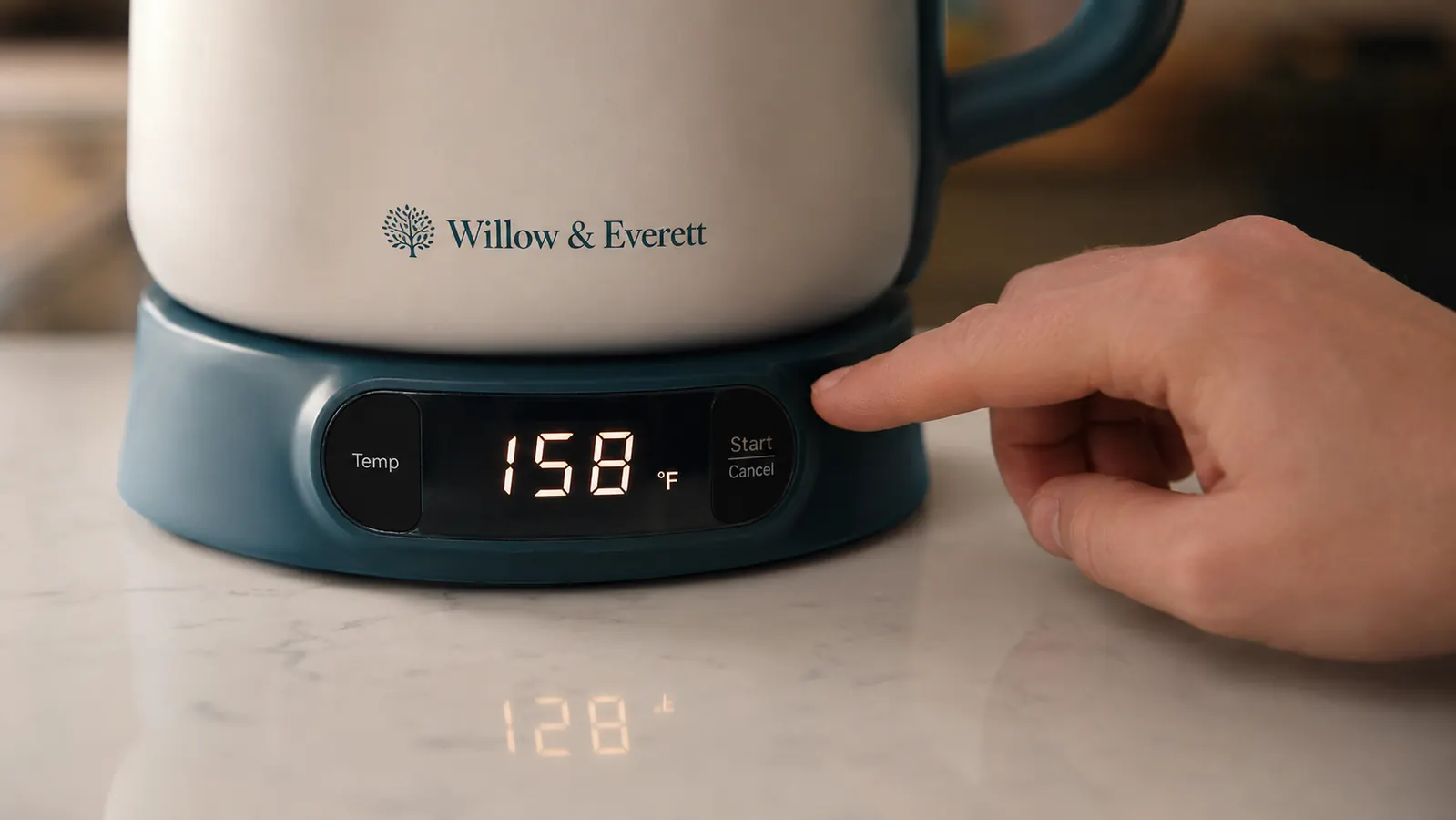
This is the part that matters most, because temperature control is the entire reason to buy a gooseneck kettle over a basic one, and it's the part where the Willow's marketing overpromises a little. The presets are accurate most of the time, close enough that I can't taste the difference between the display's number and reality on an average morning. But on colder mornings, when the tap water going in is noticeably chillier, I've watched the display overshoot the target by a handful of degrees before settling, especially on the higher settings closer to a full boil.
It's not a dramatic swing. We're talking a small handful of degrees, not twenty. For most people making coffee or tea, that margin won't wreck a cup. But it means the number on the display is a very good estimate, not a guarantee, and I stopped treating it as gospel around month two once I noticed my pour-over occasionally tasted a shade sharper than it should have on the exact same preset I'd used the day before. I've written out the pour method I eventually settled around in a separate step-by-step guide to pour-over with a gooseneck kettle, and part of that guide exists because I had to build in a small margin for exactly this kind of drift.
The display itself also lags a little behind the actual water temperature, especially in the last stretch before it hits the target. I've learned not to trust the number the instant it stops climbing, since the water inside seems to keep evening out for another few seconds after the display settles. None of this makes the kettle useless for precision brewing, it's still leagues better than a kettle with a single boil setting and nothing else. It just means precision here is relative, not absolute, and the listing photos with their clean round numbers don't communicate that at all.
The Keep-Warm Feature Is Not What You Think
Keep-warm sounds like it should hold your water at a steady temperature indefinitely, the way a slow cooker holds a simmer. That's not quite what happens. The Willow's keep-warm mode lets the water drift down a few degrees, then kicks the heating element back on to bring it back up, in a cycle, rather than holding one constant number. Practically, this means water that's technically on keep-warm can still be a little cooler or a little warmer than the number you originally set, depending on where it happens to be in that cycle when you actually go to pour.
It also shuts itself off automatically after a set stretch of time, which caught me off guard the one occasion I actually needed it to hold longer, mid-recipe, with my hands full of something else. I came back to a kettle that had quietly powered down and cooled to room temperature, assuming I no longer needed it. For tea specifically, water that's sat on keep-warm and then gone cold tastes noticeably flat when reheated a second time, and I've learned to reheat from scratch rather than trust a kettle that's been sitting idle for more than a few minutes.
What I Considered Instead
Before buying the Willow, I looked at a couple of other electric gooseneck kettles in the same general category, including the Fellow Stagg EKG and a Bonavita model, both of which show up constantly in pour-over forums as the enthusiast picks. Both have a reputation for tighter temperature accuracy than what I've described above, and the Fellow in particular is known for a display that holds steadier during keep-warm. Neither one solved the spout-drip problem entirely, from what I could find in other owners' complaints, so that particular annoyance seems to be closer to a category-wide quirk of gooseneck kettles generally than something specific to Willow.
What kept me on the Willow rather than one of those was mostly counter-space logic and cost relative to what I actually needed. I'm not chasing competition-grade pour-over, I'm trying to get a decent cup of coffee on a schedule that changes daily, and for that use case the accuracy gap between the Willow and the pricier options didn't seem worth the difference. I did write up a full side-by-side against a plain stovetop gooseneck kettle as well, if you're deciding between electric and stovetop rather than between two electric models, since that's a different tradeoff entirely.
If precision is the whole point of your purchase and you're brewing competition-level pour-over multiple times a day, one of the pricier enthusiast kettles is probably the more honest buy. If you just want meaningfully better than boiling-everything-to-death, the Willow gets you most of the way there without asking you to spend more on a kettle than you'd spend on the coffee itself over a year.
Noise, Weight, and the Small Stuff That Adds Up
The kettle isn't loud, exactly, but it isn't silent either. There's an audible hum through most of the heating cycle, closer to the sound of a laptop fan under load than anything I'd call disruptive, but it's noticeable if you're sitting nearby in an otherwise quiet kitchen early in the morning. It's not a complaint so much as a fact worth knowing if you're someone who likes total quiet before the rest of the house is up.
Full, the kettle is heavier than it looks in photos, and the handle sits at an angle that took some getting used to for a controlled one-handed pour. After a long boil, the top of the handle near the lid gets warm enough to notice, not burn-level hot, but enough that I grip lower on the handle out of habit now. None of this is disqualifying on its own. It's the kind of thing that only becomes obvious once you've used it daily for a while, which is exactly the point of writing all of this down instead of letting the marketing photos speak for the whole experience.
What I Liked
- Gooseneck spout gives real control over pour speed and placement, the whole reason to buy one of these
- Temperature presets cover pour-over, green tea, and off-boil white tea without much guessing
- Heats fast, water at temperature in under five minutes on most settings
- Compact enough to live on a shelf instead of taking up counter space full time
- Keep-warm is a genuinely nice extra even though it isn't a true steady simmer
Where It Falls Short
- Spout drips a bit after pouring and needs a wipe most times
- Higher presets can overshoot the target by a few degrees, especially with cold tap water
- Base leaves a faint water ring if you don't dry it or use a trivet underneath
- Power cord is short, roughly two feet, which limits where it can sit near an outlet
- Keep-warm shuts itself off after a set stretch, which caught me off guard the one time I actually needed it longer
The Willow kettle is precise until it isn't, and knowing exactly where that line falls took me a few months to learn the hard way.
Who This Is For
If your coffee currently tastes scorched more mornings than not, and you're willing to treat the temperature display as a strong estimate rather than an exact promise, the Willow is still a real upgrade over a basic kettle. It rewards someone who wants noticeably better pour-over without chasing competition-level precision, and once you know to wipe the spout and keep a trivet underneath, most of what I've listed here stops being a daily annoyance at all. I still reach for it most mornings, and the fuller case for that is in the story of how it actually changed my routine.
Who Should Skip It
If you're brewing serious competition-grade pour-over and a few degrees of drift genuinely matters to your results, spend the extra on one of the enthusiast kettles built specifically around tighter accuracy. And if unmarked quirks bother you more than they interest you, if you'd rather not spend the first month troubleshooting drip marks and water rings on a machine that turns out to be working mostly as intended, the learning curve here might not be worth it for you. For everyone else making the jump from a basic kettle, the tradeoffs are manageable once you know they exist, which is the entire reason I wrote them down instead of letting you find each one yourself.
Know the Quirks Going In, and This One's Easy to Live With
Check today's price on the Willow & Everett gooseneck kettle and see if it's currently in stock for your kitchen.
Amazon See Today's Price on Amazon →